Discover which flooring truly protects against Suffolk County's moisture challenges and which options work best for your Long Island home.
Share:
Summary:
Waterproof floors are highly durable and can withstand not only liquid spills but also more significant accidents like floods, while water-resistant flooring is designed to handle minor spills when promptly addressed. Think of water-resistant as a raincoat – it’ll keep you dry in light rain, but you wouldn’t wear it swimming.
If you have a waterproof floor that doesn’t allow water to penetrate, the water will sit until it is wiped or until it evaporates. If the flooring is water resistant and you take some time before you wipe it, the water will seep into the floor and cause molding, among other problems. In Suffolk County’s humid environment, this distinction becomes critical for your home’s long-term protection.
Suffolk County’s unique geography creates flooring challenges you won’t find elsewhere. Sandy soil near the coast behaves completely differently from clay soil inland. Coastal areas deal with salt air and storm surge, while inland homes face basement moisture from groundwater.
Traditional flooring fails here because it wasn’t designed for these conditions. Hardwood swells and buckles. Regular laminate develops mold underneath. Even expensive engineered wood can’t handle the humidity levels we see during summer months. Your home isn’t just dealing with occasional spills – it’s constantly battling environmental moisture that many flooring materials simply can’t handle.
Common in Long Island basements due to our humid climate, these fungi typically appear as dark spots on walls, floors, or stored items. In Long Island’s climate, this often results from condensation or water seepage through foundation walls. The moisture doesn’t just come from above – it rises through concrete floors and seeps through foundation walls, creating challenges that require genuinely waterproof solutions.
This is why water-resistant flooring that works perfectly in Arizona might fail within months in a Suffolk County basement. Waterproof flooring was engineered specifically for environments like ours. The core materials don’t absorb moisture, so they maintain their shape and integrity regardless of what nature throws at them.
True waterproof flooring is completely impervious to water. Unlike “water-resistant” products that can eventually fail, waterproof luxury vinyl planks and tiles have cores made from materials like PVC that don’t absorb moisture at all. This means you can have standing water on the surface for extended periods without any swelling, warping, or damage.
But here’s what the marketing materials don’t always explain clearly: While no flooring material is truly 100% waterproof, some, like SPC (Stone Plastic Composite) vinyl, come close to achieving this level of water resistance. The key is understanding that “waterproof” refers to the flooring material itself, not necessarily the installation.
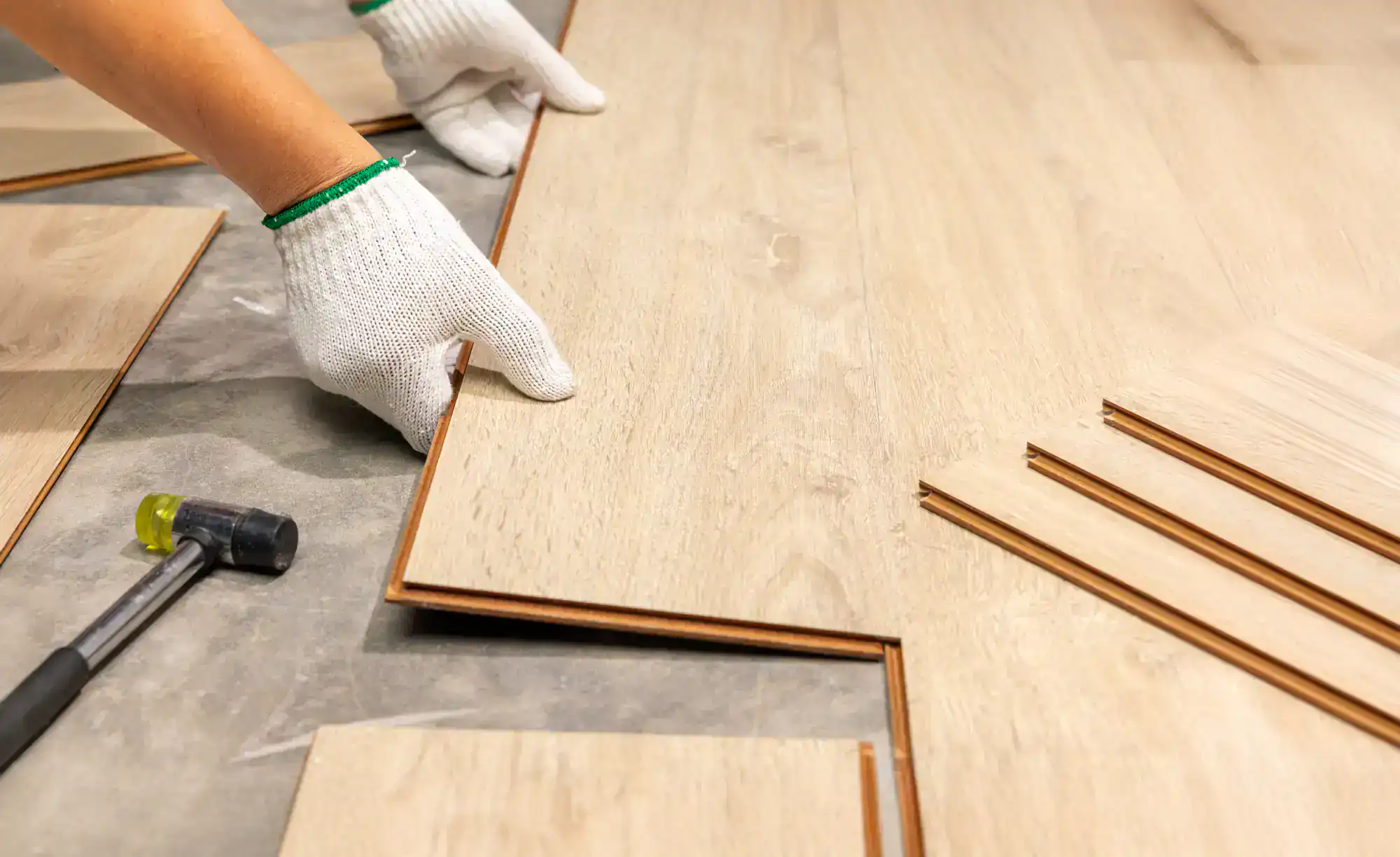
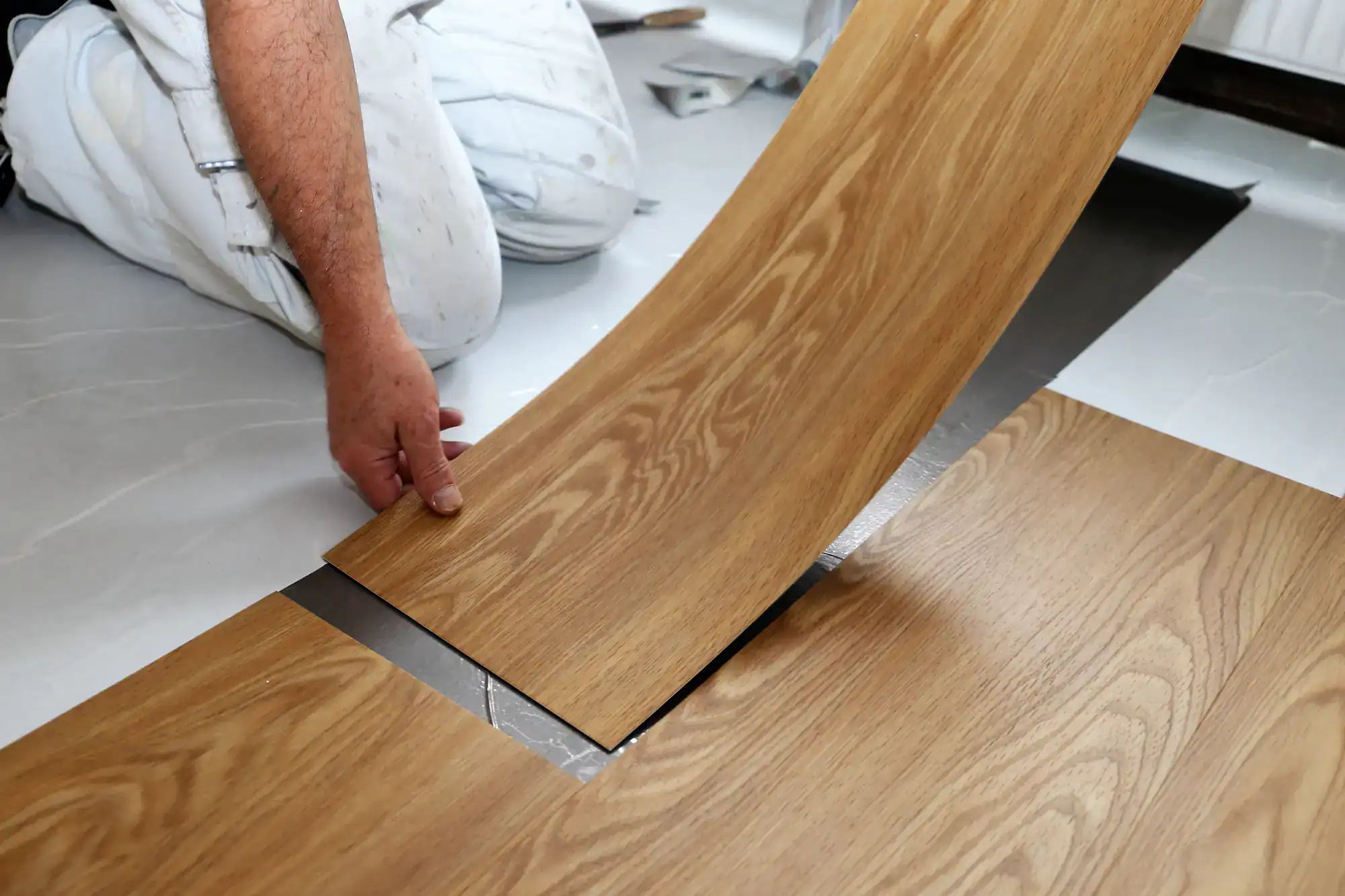
You should also keep in mind that while your flooring can be waterproof, the subfloor underneath may not be. As a result, you’ll need to keep water from getting under the flooring to prevent subflooring damage. Professional installation becomes crucial because even waterproof flooring can fail if water gets underneath through improperly sealed edges.
This is especially important in Suffolk County where we deal with basement moisture, coastal humidity, and seasonal flooding. The key is making sure you’re getting actual waterproof products, not just water-resistant ones that might hold up temporarily. When you’re investing in flooring for Long Island conditions, you need materials and installation methods that address moisture from every angle.
Want live answers?
Connect with a Hamptons Carpet One expert for fast, friendly support.
Now that you understand the protection levels, let’s look at how different flooring types actually perform in Suffolk County homes. Most vinyl floors, including luxury vinyl and luxury vinyl plank floors, are waterproof. But laminate and engineered wood have more nuanced stories that matter for your decision.
Laminate flooring, containing softwood fibers, offers water resistance that can withstand small spills and significant wear and tear. However, water-resistant laminate is still susceptible to buckling and damage from excessive water exposure, such as flooding.
When you’re looking at waterproof vinyl options, you’ll encounter two main types: SPC (Stone Plastic Composite) and WPC (Wood Plastic Composite). SPC, an abbreviation for stone plastic composite, boasts a unique core composition of approximately 60% calcium carbonate (limestone), polyvinyl chloride, and plasticizers. The combination results in a thin, yet exceptionally dense, core. It delivers unmatched resilience and complete waterproofing to the flooring planks while offering a perfect balance of strength and versatility for numerous applications.
WPC, or wood plastic composite, refers to a flooring material with a core composition typically including polyvinyl chloride, calcium carbonate, plasticizers, a foaming agent, and wood-like materials such as wood flour. The WPC core is enhanced with a foaming agent, making it slightly softer and more comfortable in addition to being completely waterproof.
Here’s how this affects your Suffolk County home: Because SPC’s core layer is comprised of limestone, it has a higher density in comparison to WPC, though is thinner overall. This makes it more durable compared to WPC. Its high density offers better resistance from scratches or dents from heavy items or furniture being placed on top of it.
SPC gets its extra durability from the rigid stone composite core, but that also makes it inflexible and cold. Since WPC has a core with more give, it’s more comfortable under your feet, and it retains some warmth, which is especially important in your home. For Suffolk County basements that tend to be cold, WPC might provide better comfort, while SPC offers maximum durability for high-traffic areas.
Both options work excellently in our climate, but WPC is ideal for basements, bathrooms, kitchens, and all grade levels of the home. WPC is often considered a better option for residential use since it’s softer underfoot. SPC vinyl works in those areas, as well as in commercial spaces where there’s a ton of foot traffic.
The short answer, to be direct, is no, engineered hardwood floors are not waterproof in the same way that luxury vinyl or tile floors are. However, they offer significantly enhanced moisture resistance compared to solid hardwood, making them a much more versatile and durable option for many areas of your home.
While not waterproof, engineered hardwood is distinctly water-resistant. This means it can handle normal household humidity fluctuations, occasional spills (if wiped up promptly), and perform well in environments where solid hardwood would be a risky choice. Here’s why engineered hardwood offers enhanced moisture resistance: Dimensional Stability: The cross-ply construction significantly reduces the natural expansion and contraction of wood in response to humidity.
However, there are important limitations for Suffolk County homes. So, while engineered hardwood is much more stable than solid hardwood in the face of humidity changes, it cannot withstand continuous submersion or large, unaddressed spills without potential damage. High humidity levels can cause the wood to absorb moisture. For high-moisture areas, such as bathrooms or laundry rooms, vinyl, tile, or laminate are better choices. These materials are waterproof.
For Long Island basements specifically, Below-grade installations (basements): While not for flood-prone basements, engineered hardwood can perform better in basements with controlled humidity than solid wood. The key phrase here is “controlled humidity” – if your Suffolk County basement has moisture issues, engineered hardwood isn’t your solution.
New waterproof engineered hardwood options are changing this landscape. HydroBlok engineered hardwood includes an innovative, three-part system that protects your wood floors from water damage. So, you’ll enjoy 100% waterproof protection with real wood flooring, not laminate or vinyl. These newer options give you the authentic wood look with genuine waterproof protection, though they come at a premium price.
The choice between waterproof and water-resistant flooring comes down to your home’s specific conditions and your peace of mind. Waterproof flooring changes everything. These aren’t just “water-resistant” floors that might hold up for a while. We’re talking about completely waterproof luxury vinyl planks and tiles that look like real hardwood or stone but never swell, warp, or grow mold when exposed to water.
For Suffolk County homes, waterproof options make sense in basements, kitchens, bathrooms, and entryways where moisture exposure is likely. Water-resistant options like quality engineered hardwood can work beautifully in living areas, bedrooms, and dining rooms where spills are occasional and humidity is controlled. The key is matching your flooring choice to your home’s actual conditions, not just your aesthetic preferences.
We’ve been helping Suffolk County homeowners navigate these decisions since 1988, and we understand exactly how Long Island’s climate affects different flooring materials in real homes with real families.
Article details:
Share:
Continue learning: