Stair runners do more than look good—they prevent slips, quiet your home, and protect expensive hardwood from daily damage. Here's what you need to know.
Share:
Summary:
Hardwood stairs look beautiful until someone slips on them. The smooth surface that showcases natural grain also creates a genuine safety hazard, especially for kids running down in socks, elderly family members with mobility concerns, or pets scrambling between floors.
A quality stair runner provides immediate traction on every step. The textured surface grips feet and paws, significantly reducing slip-and-fall risks. For families in Suffolk County, NY dealing with beach sand tracked through the house or humidity from coastal air, that extra grip becomes even more critical.
Then there’s the noise. If you’ve ever cringed at 6 AM footsteps or tried to have a conversation while someone uses the stairs, you know the problem. Carpet absorbs sound by approximately 35%, transforming loud thuds into quiet steps. Multi-level homes benefit most—suddenly you can actually sleep through someone’s early morning routine.

Refinishing a staircase costs thousands of dollars and disrupts your home for days. Most wear happens on the central portion of each tread—exactly where shoes make contact with every step. Constant friction wears down the protective finish, exposing raw wood that stains and damages easily.
A properly installed stair runner with quality padding completely absorbs this friction and impact. You’re essentially creating a protective shield over the most vulnerable part of your stairs. For homeowners with historic properties or custom hardwood installations, this protection extends the life of your flooring by decades.
The math makes sense when you consider replacement costs. A quality stair runner installation might run $800-$1,200 for a straight staircase in Suffolk County, NY. Compare that to refinishing costs of $3,000-$5,000 or more, and the runner pays for itself by preventing damage you’d otherwise need to repair.
Beyond pure economics, there’s the disruption factor. Refinishing means moving furniture, dealing with fumes, staying out of areas for days while finishes cure. A runner installation typically completes in 4-6 hours for standard stairs, and you’re using them normally by that evening.
Think about traffic patterns in your home. If you have kids, pets, or simply use your stairs constantly throughout the day, that’s hundreds of impacts on the same spots every week. Wood floors weren’t designed for that kind of concentrated abuse. The protective layer a runner provides isn’t optional if you want your stairs looking good ten years from now—it’s essential.
Safety and protection matter most, but stair runners deliver benefits you might not expect. Comfort ranks high—walking on carpet feels better than hard surfaces, especially barefoot. That cushioned surface also adds warmth, both literally and aesthetically, making stairs feel more inviting.
Noise reduction extends beyond just quieter footsteps. The sound-dampening properties actually help you detect other noises in your home more easily. Instead of constant stair traffic drowning out everything else, you hear what actually matters. For families with different schedules, this alone changes daily life significantly.
Visual impact shouldn’t be underestimated either. A well-chosen runner can tie together design elements from different floors, create flow throughout your space, or make your staircase a genuine focal point. The contrast between exposed wood edges and the runner down the center adds architectural interest that bare or fully carpeted stairs simply can’t match.
For homes in Suffolk County, NY, there’s also the resale consideration. Potential buyers notice stair runners immediately—they signal that someone has taken care of the property, thought about safety, and invested in quality finishes. Families with young children or elderly parents specifically look for homes with safer stairs. That competitive advantage matters in a market where first impressions drive offers.
The installation process itself, when done professionally, creates long-term value. Proper tack strips, quality padding, and secure attachment methods mean your runner stays put for years without bunching, slipping, or coming loose. Amateur installations or cheap materials fail quickly, creating safety hazards instead of solving them. That’s why working with experienced installers who understand stair configurations makes such a difference.
Want live answers?
Connect with a Hamptons Carpet One expert for fast, friendly support.
Material choice determines how your runner performs under actual use. Marketing claims sound great until you’re dealing with stains, wear patterns, or flattening after a few years. Understanding what different fibers actually do helps you make decisions based on your household’s real needs.
Wool remains the premium choice for good reason. The natural crimp in wool fibers acts like tiny springs—they compress under foot traffic then bounce back to original height. This resilience prevents the traffic lane appearance that cheaper materials develop. Wool also contains lanolin, providing inherent stain resistance without chemical treatments.
Nylon offers a different value proposition. Modern nylon runners feel surprisingly soft while delivering exceptional durability and stain resistance. For families with active kids or pets, nylon’s engineered toughness and easy cleaning make it practical. It costs less than wool while still performing well under heavy traffic.

The wool versus nylon decision comes down to priorities and budget. Wool runners in high-traffic homes can look new after twenty years with proper care. The natural fiber ages gracefully, maintaining appearance and texture that synthetics struggle to replicate. Wool also provides superior sound absorption and a matte, high-end finish.
However, wool requires more maintenance attention. Professional cleaning every 12-18 months keeps it looking best, and spills need immediate treatment. The higher upfront cost—sometimes double what quality nylon runs—matters for budget-conscious homeowners. But that investment often pays off in longevity, especially if you’re planning to stay in your home long-term.
Nylon shines in practical performance. Solution-dyed nylon resists staining at the molecular level—the color goes all the way through the fiber rather than being applied as a coating. This means even bleach-worthy accidents often clean up without permanent damage. For households where spills happen regularly, that peace of mind has real value.
Modern nylon has also closed the comfort gap. Quality nylon runners in loop or cut-pile constructions feel soft underfoot, not scratchy or obviously synthetic. The visual difference between high-end nylon and wool has narrowed considerably. Many homeowners choose nylon for back stairs or high-traffic areas while reserving wool for front staircases that make first impressions.
Wool-nylon blends offer middle ground—typically 80% wool with 20% nylon. You get wool’s natural resilience and appearance with nylon’s added toughness and easier maintenance. These blends work particularly well for Suffolk County, NY homes dealing with coastal humidity, as the synthetic component helps resist moisture-related issues that can affect pure wool.
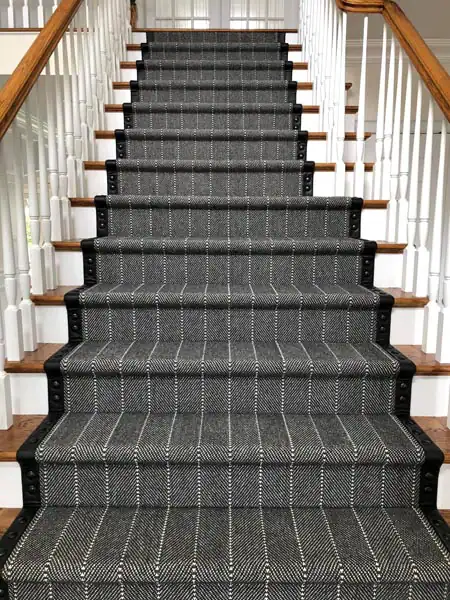
Design trends for 2026 show clear movement toward patterns that make statements. Herringbone runners dominate current installations, offering classic sophistication that works in both traditional and contemporary homes. The geometric pattern adds visual interest without overwhelming spaces, and the diagonal weave helps hide dirt and wear effectively.
Bold patterns are replacing safe neutrals. Geometric designs, stripes, and even animal prints appear on staircases throughout Suffolk County, NY as homeowners recognize that runners can be focal points rather than background elements. The key is balancing pattern intensity with the rest of your space—if you’re going bold on stairs, keep adjacent area rugs more subdued.
Color choices have shifted too. Warm, earthy tones like browns, beiges, and taupes are replacing the cool grays that dominated for years. These warmer colors hide dirt better, complement natural wood tones, and create cozier atmospheres. For homes with pets or high traffic, darker mid-tones prove most forgiving—light enough to avoid showing every speck of dust, dark enough to hide the inevitable wear.
Width and reveal matter more than most people realize. Standard runners typically measure 26-27 inches wide for stairs 40 inches or less, leaving about 4 inches of exposed wood on each side. This creates visual contrast while maintaining a safe walking surface. Wider stairs often benefit from 30-33 inch runners, though the proportion should always feel balanced rather than following rigid rules.
Pattern scale needs to match your staircase dimensions. Large-scale patterns can overwhelm narrow stairs, while tiny patterns disappear on wide staircases. We often recommend bringing samples home to see how patterns look in your actual space and lighting. What appears perfect in a showroom might read completely differently on your stairs.
Custom fabrication allows pattern matching at turns and landings. This attention to detail separates professional installations from amateur work. When patterns align properly through complex configurations, the result looks intentional and polished. When they don’t, it’s immediately obvious something went wrong.
Stair runners solve real problems—slippery surfaces that worry you every day, noise that disrupts your household, and wear that damages expensive flooring. The right combination of material, design, and professional installation transforms your staircase into something both beautiful and functional.
Material choice depends on your priorities. Wool delivers unmatched longevity and natural performance if budget allows. Nylon provides practical durability and easy maintenance for active households. Either way, quality materials and proper installation matter far more than choosing the absolute cheapest option.
Design trends come and go, but choosing patterns and colors you actually like ensures satisfaction for years. Your staircase gets used multiple times daily by everyone in your household—it should reflect your style while meeting your family’s practical needs.
For homeowners in Suffolk County, NY ready to enhance safety, reduce noise, and protect their hardwood investment, we offer expert guidance and professional installation that gets it right the first time.
Article details:
Share:
Continue learning: