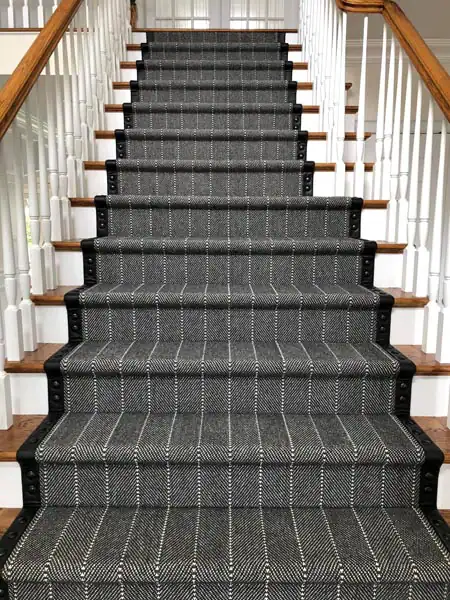
Custom stair runners transform your staircase into a stunning focal point while protecting hardwood, improving safety, and reducing noise in your Hamptons home.
Share:
Summary:
Bare hardwood stairs take a beating. The finish wears through where feet land most often, exposing raw wood that stains and damages easily. Refinishing an entire staircase runs into thousands of dollars and disrupts your home for days.
A custom stair runners protects the high-traffic center while showcasing the beautiful wood on either side. You’re not covering up your stairs—you’re preserving them. The carpet absorbs the friction and impact that would otherwise destroy your finish, meaning your hardwood stays pristine underneath for decades.
Safety matters too. Hardwood and painted stairs get slippery, especially for children, elderly family members, and pets. A quality runner provides consistent traction on every step. No more white-knuckling the handrail or holding your breath when your dog bolts upstairs.
Then there’s the noise. If you live in a multi-story home, you know how footsteps carry. Stair runners absorb sound dramatically, creating a quieter, more peaceful environment. Early morning coffee runs and late-night trips to the kitchen stop waking everyone up.
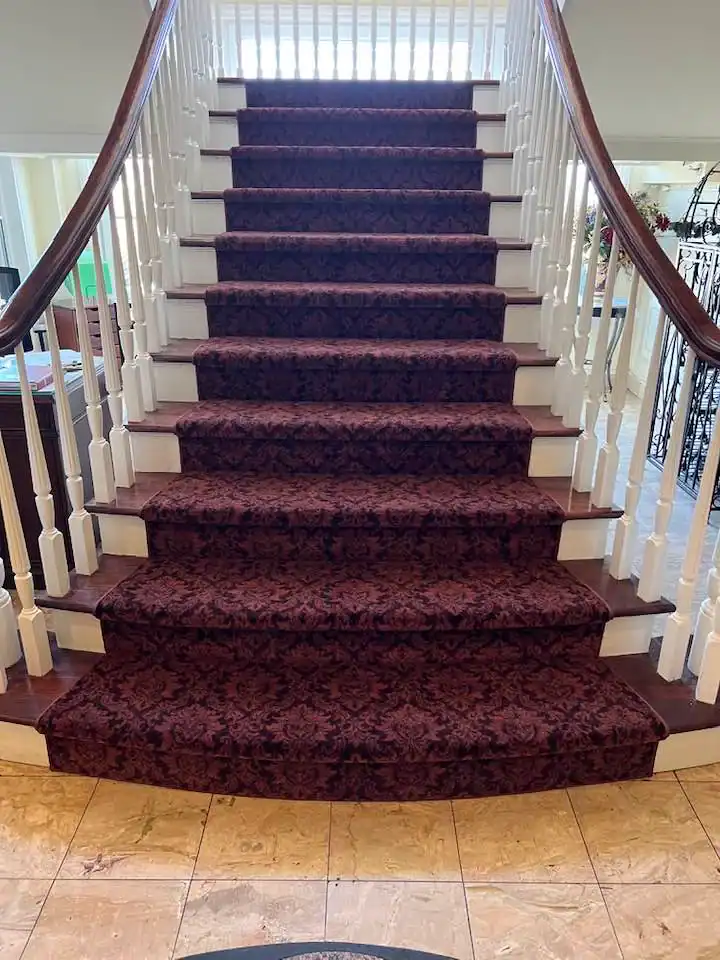
Material choice determines how your runner looks, feels, and performs over time. Hamptons homes deal with specific challenges—coastal humidity, high traffic from family and guests, and the need to match a refined aesthetic. Not every material handles these demands equally.
Wool remains the premium choice for good reason. It naturally resists stains, handles moisture well, and maintains its appearance through years of use. The fiber has a luxurious feel underfoot that synthetic options can’t quite match. For Hamptons homes where quality matters, wool delivers both performance and the sophisticated look that complements coastal elegance.
If you have active kids or pets, solution-dyed nylon offers practical benefits. It resists stains exceptionally well and cleans up easily when accidents happen. The durability stands up to heavy traffic without showing wear patterns quickly. While it doesn’t have the same prestige as wool, modern nylon options look far better than they used to and cost less upfront.
Natural fibers like sisal and jute create beautiful texture and work well in casual coastal settings. They’re eco-friendly and add an organic element that fits the Hamptons aesthetic. The tradeoff is that they can feel rough on bare feet and require more care in humid conditions. They’re best suited for areas with lighter traffic or homeowners who prioritize natural materials above all else.
Blended materials combine the best qualities of different fibers. A wool-nylon blend, for example, gives you wool’s beauty with added durability from synthetic fibers. These options often hit a sweet spot between performance and budget, especially for families who want quality without paying premium wool prices.
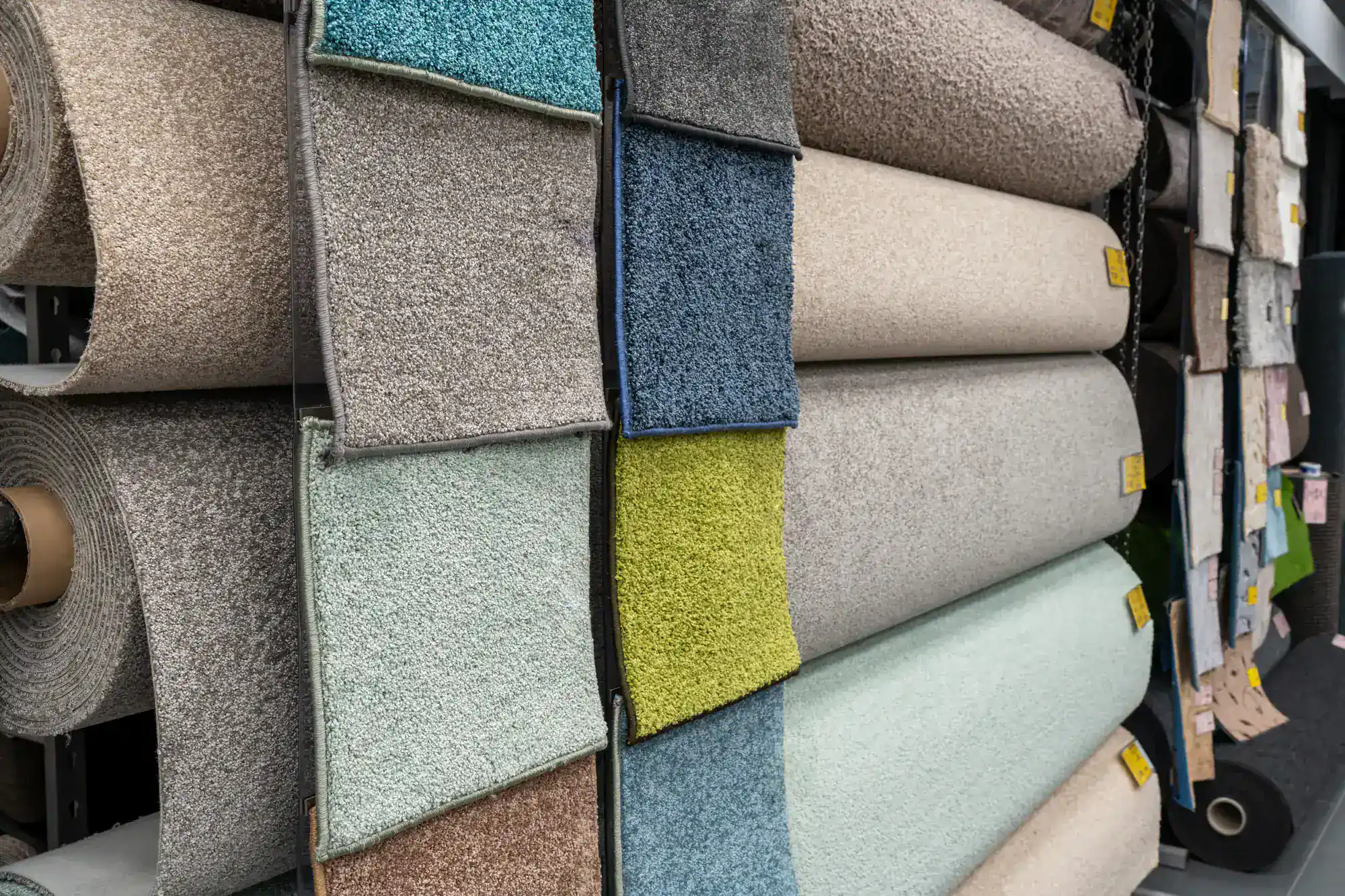
The thickness and construction of the material matter as much as the fiber type. Tightly woven runners resist crushing and maintain their appearance longer. Loose weaves may feel softer initially but show wear faster in high-traffic stair applications. We can show you samples that demonstrate these differences in person.
Coastal humidity affects some materials more than others. Wool naturally regulates moisture, which is why it performs so well in Hamptons homes. Synthetic options are generally moisture-resistant but can trap heat. Natural fibers like jute may require additional care to prevent moisture-related issues. Understanding how your local climate impacts material longevity helps you make a choice that lasts.
Pattern selection affects both the aesthetic and practical performance of your runner. The right pattern complements your home’s design while hiding normal wear in smart ways.
Solid colors create a clean, sophisticated look that never goes out of style. Neutral tones like warm grays, soft beiges, and creamy whites align perfectly with the Hamptons palette. These shades work with any decor changes you make over the years. The simplicity lets your architectural details shine while still providing visual interest through texture.
Darker colors hide dirt and wear better than light ones, but they can make a space feel smaller. Medium tones offer the best balance—they’re forgiving enough for daily life but don’t overwhelm the staircase visually. If your home has abundant natural light, you can go lighter without worrying about every footprint showing.
Herringbone patterns have become increasingly popular and for good reason. The diagonal weave adds movement and visual interest without being overwhelming. It’s a classic pattern that feels both traditional and current. The textured surface also helps hide traffic patterns better than smooth, solid colors.
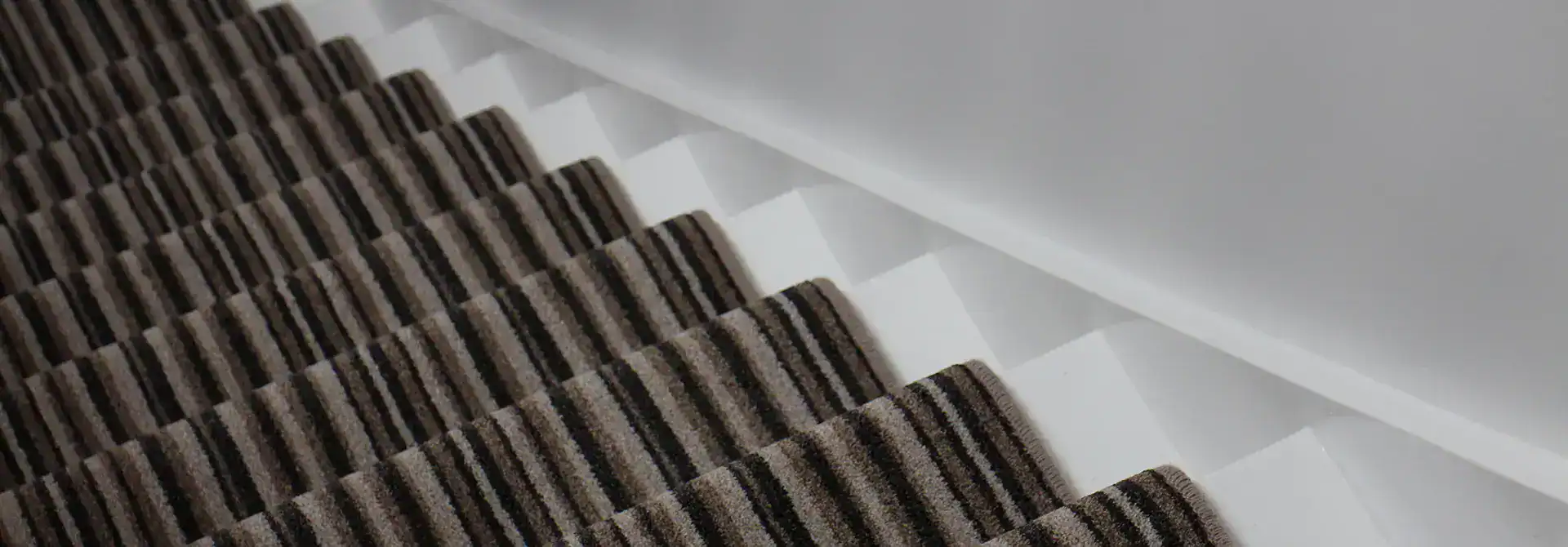
Stripes work beautifully on stairs, especially vertical stripes that draw the eye upward. They can make a narrow staircase feel wider and add a subtle design element without competing with other patterns in your home. Horizontal stripes create a more casual, relaxed feel that fits well with coastal aesthetics.
Geometric patterns make a bolder statement. If your home leans modern or eclectic, these designs can turn your staircase into a focal point. The key is choosing patterns with appropriate scale—too large and they become dizzying on stairs; too small and they blur into visual noise. Medium-scale geometrics typically work best.
Avoid overly busy patterns that make it hard to see where each step begins and ends. Safety matters more than making a dramatic statement. Patterns should enhance the staircase, not create visual confusion that could contribute to missteps.
Color trends for 2026 lean toward warmer tones. Rich browns, chestnuts, and honey hues are replacing the cool grays that dominated recent years. These earthy colors bring warmth and work beautifully with the natural wood tones common in Hamptons homes. They also hide wear exceptionally well while feeling current and intentional.
Consider how your runner will photograph too. If you plan to sell your home eventually, neutral patterns and colors appeal to the widest range of buyers. They make spaces feel larger and more inviting in listing photos. Bold choices are wonderful if you’re staying put, but classic options protect your resale value.
Want live answers?
Connect with a Hamptons Carpet One expert for fast, friendly support.
Custom fabrication means your runner fits your specific staircase perfectly. No generic sizes that almost work. No gaps or bunching. Every measurement accounts for your unique configuration.
The process starts with one of our professionals coming to your home for precise measurements. We measure each tread depth, riser height, and total run. If you have landings, turns, or curved sections, these get special attention because they require more complex cutting and binding.
For curved or spiral staircases, custom fabrication becomes essential. Each section must be cut to follow the exact contours of your stairs. This requires more material and skilled labor, but the result is a seamless runner that looks like it was always part of your home. Many installers won’t even attempt curved installations, so finding experienced professionals matters.
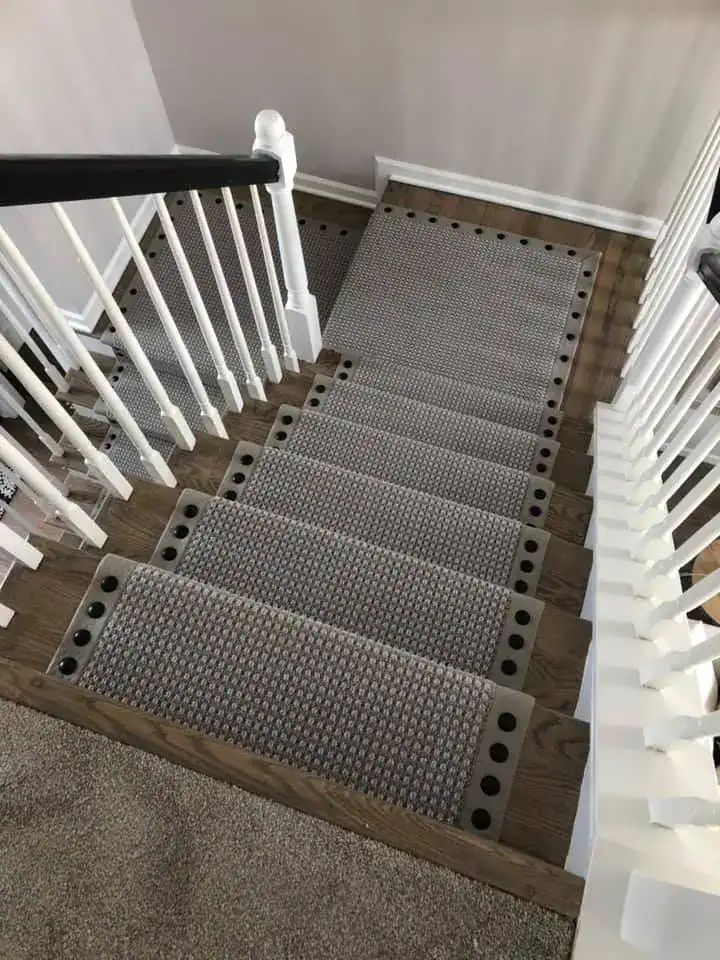
Two primary installation methods exist, and each creates a different look and feel.
Waterfall installation lets the carpet flow continuously over each step, creating a smooth, cascading appearance. The runner is secured at the base of each step, and the fabric curves gently over the nose. This method uses slightly less material and creates a softer, more flowing aesthetic. It’s easier to install and therefore typically costs less.
Hollywood installation wraps the carpet tightly around each tread and fits it close to the risers. This creates a more tailored, crisp appearance with defined edges on each step. It requires more precise cutting and takes longer to install, which increases labor costs. The result looks more custom and architectural.
Which method you choose depends partly on your aesthetic preferences and partly on your staircase configuration. Waterfall works well on most standard stairs. Hollywood makes sense when you want a more polished, high-end look or when your staircase has unique features that benefit from precise fitting.
Proper padding underneath your runner is non-negotiable. Quality padding extends the life of your carpet by absorbing impact and reducing wear. It adds cushioning that makes stairs more comfortable to walk on. Most importantly, it improves safety by providing additional grip and reducing the chance of the runner shifting.
The installation itself involves securing the runner with tack strips, staples, or both, depending on the method and your staircase construction. Our experienced installers know exactly where to place fasteners for maximum security without damaging your hardwood. We ensure the pattern aligns properly on each step and that edges are finished cleanly.
Binding on the edges prevents fraying and gives your runner a finished appearance. The binding color typically matches the carpet, creating a seamless look. Some homeowners choose contrasting binding as a design detail, which can add visual interest if done thoughtfully.
For staircases with landings, the runner can either stop at the landing edge or continue across it. Continuing the runner creates visual continuity and provides the same noise reduction and safety benefits on the landing. Stopping at the edge showcases more of your hardwood and can reduce overall cost. Both approaches work—it’s a matter of preference and budget.
Complex configurations like pie-shaped steps or multiple turns require templating before any cutting happens. We create a precise template of your staircase, use it to cut the carpet accurately, and then install it. This extra step ensures perfect fit on challenging layouts.
Installation typically takes four to six hours for a straight staircase. Complex configurations with curves, landings, or custom features may take longer. Most homeowners can use their stairs again within hours of completion, though it’s smart to let everything settle for a day before heavy traffic resumes.
Pricing for custom stair runners varies based on several factors, and understanding these helps you budget appropriately.
Material costs form the largest part of your investment. Basic synthetic runners start around $600 to $800 installed for a straight staircase with 12 to 16 steps. Wool runners typically range from $1,000 to $2,700 installed. High-end custom options with intricate patterns or premium materials can reach $2,300 to $5,000 or more.
Installation labor depends on complexity. Straight staircases are straightforward and cost less. Curved stairs, multiple landings, and pie-shaped steps require significantly more time and skill, increasing labor costs. Professional installation for a straight staircase typically runs $350 to $600. Complex installations can reach $600 to $1,000 or more.
Padding adds $0.75 to $1.75 per square foot. Quality padding is worth the investment because it protects your carpet and improves comfort and safety. Skimping here means replacing your runner sooner.
Binding and edge finishing add to the total cost but are necessary for a polished appearance and long-term durability. Custom binding or decorative elements like stair rods increase costs but can elevate the overall look significantly.
If you’re replacing existing carpet, removal costs $7 to $10 per step for standard removal. Glued-down carpet or complex shapes may cost up to $25 per step to remove.
The width of your runner affects material costs. Standard widths of 27 to 32 inches are most common and cost-effective. Custom widths require more material and fabrication, increasing the price.
When you compare these costs to refinishing hardwood stairs, runners become more attractive. Refinishing an entire staircase costs thousands of dollars, creates significant disruption, and doesn’t address safety or noise concerns. A quality runner protects your stairs, improves functionality, and costs less upfront.
Think of a custom stair runner as preventative maintenance that also happens to look beautiful. You’re protecting a much larger investment—your hardwood stairs—while solving multiple problems at once. The cost makes sense when you consider what you’re getting: safety, noise reduction, hardwood protection, and enhanced aesthetics all in one solution.
For Hamptons homes where quality and craftsmanship matter, investing in proper materials and professional installation ensures your runner performs well for years. Cutting corners on materials or installation typically means replacing the runner sooner, which costs more in the long run.
Your staircase connects every level of your home. It deserves the same attention you give to other high-impact spaces. A custom stair runner protects your investment, improves safety, reduces noise, and adds a design element that ties your home together.
Start by thinking about your priorities. Is safety your main concern? Focus on materials that provide excellent traction. Worried about wear on your hardwood? Prioritize durability and proper padding. Want to make a design statement? Explore patterns and colors that complement your Hamptons aesthetic.
Bring samples home and see how they look with your lighting and existing decor. Walk on them. Feel the texture. Make sure they work with your lifestyle before committing.
When you’re ready to move forward, working with experienced professionals makes the difference between a runner that looks good for a few years and one that performs beautifully for decades. At Hamptons Carpet One Floor & Home, we bring the expertise, quality materials, and custom fabrication capabilities that Hamptons homes require. Our team understands the unique needs of coastal properties and provides the personalized service that turns a flooring project into a lasting improvement you’ll appreciate every single day.
Article details:
Share:
Continue learning: