New waterproof flooring technology in 2025 offers Suffolk County homeowners unprecedented protection against coastal humidity and moisture challenges.
Share:
Summary:
Suffolk County’s unique geography creates flooring challenges you won’t find elsewhere. Sandy soil near the coast behaves completely differently from clay soil inland. Coastal areas deal with salt air and storm surge, while inland homes face basement moisture from groundwater. Traditional flooring fails here because it wasn’t designed for these conditions.
In 2025, manufacturers are introducing new composite cores and enhanced sealing systems that provide superior protection against moisture. These aren’t minor improvements—they’re fundamental breakthroughs that address the root causes of flooring failure in our climate.
Waterproof flooring was engineered specifically for environments like ours. The core materials don’t absorb moisture, so they maintain their shape and integrity regardless of what nature throws at them.
The science behind 2025’s waterproof flooring represents years of research into moisture-resistant materials. Advanced waterproof technologies redefine what’s possible in moisture-prone areas. New composite cores and enhanced sealing systems protect against spills, splashes, and everyday life.
These composite cores use materials like stone plastic composite (SPC) and wood plastic composite (WPC) that simply don’t absorb water. Unlike traditional wood-based cores that swell and warp when exposed to moisture, these engineered materials maintain their dimensional stability even under extreme conditions.
Long Island homes deal with unique moisture conditions. Summer humidity, winter condensation, and the occasional basement moisture issue require flooring that truly performs. The new composite technology addresses each of these challenges through materials science rather than surface treatments that can eventually fail.
What makes this particularly relevant for Suffolk County homes is how these cores handle temperature fluctuations. Long Island homes face unique challenges. Between coastal humidity, seasonal storms, and families with active kids and pets, your floors take a beating. Traditional hardwood and laminate can’t handle the moisture levels we see here in Suffolk County.
The engineering breakthrough isn’t just about water resistance—it’s about creating flooring that adapts to our specific environmental conditions. From the salt air near the coast to the humidity variations that come with changing seasons, these materials were designed to perform where traditional options fail.
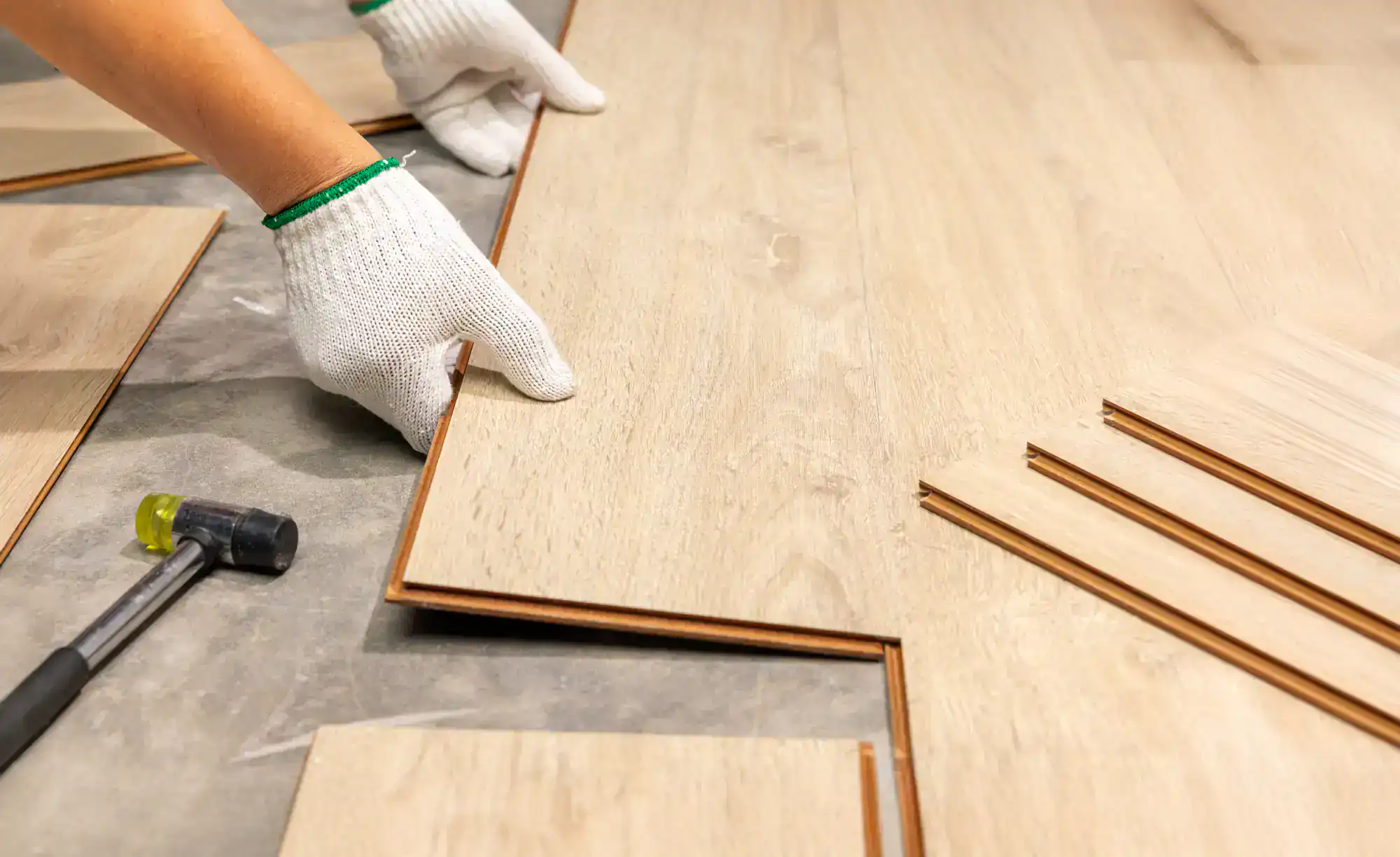
While composite cores provide the foundation of waterproof performance, 2025’s enhanced sealing systems ensure water never reaches that core in the first place. Installation enters a new era with innovative waterproof locking systems and advanced adhesives that create impermeable seals while cutting installation time and ensuring flawless results.
Traditional flooring relies on surface water resistance—an approach that works until water finds its way into seams, edges, or damaged areas. The new sealing technology creates multiple barriers that prevent water infiltration at every potential entry point.
These systems include waterproof click-lock mechanisms that seal planks together without gaps, perimeter sealing that prevents water from entering around edges, and subfloor barriers that protect from moisture coming up from below. Waterproof seal: First, the surface features a water-repellent seal that keeps spills and moisture from the core. Backing: This layer also helps provide stability for the floor and can help to keep water from penetrating the flooring from underneath. Backing layers are often made to help seal off the core from subfloor moisture that you might experience from concrete flooring or in basements, making each plank resistant to moisture from above and below.
For Suffolk County homeowners, this multi-level protection addresses the reality of how water enters our homes. It’s not just about surface spills—it’s about humidity that condenses under floors, groundwater that seeps through basement slabs, and seasonal moisture that traditional barriers can’t handle.
The installation process itself has been redesigned to support these sealing systems. Professional installers now use moisture detection tools to identify problem areas before installation and apply appropriate barriers based on your home’s specific conditions. This systematic approach ensures your waterproof flooring performs as designed from day one.
Want live answers?
Connect with a Hamptons Carpet One expert for fast, friendly support.
For 2025, waterproof laminate flooring features improved moisture resistance, ensuring it holds up in humid and spill-prone areas. This represents a complete transformation of what laminate flooring can achieve in moisture-prone environments.
Traditional laminate was essentially off-limits for kitchens, bathrooms, and basements because of its wood-based core. Water exposure meant immediate damage—swelling, warping, and eventual replacement. Waterproof floors feature a moisture-resistant core so they hold up better to water than traditional laminate or hardwood floors. This means you can install them in basements, bathrooms, kitchens, and any room throughout the home.
The benefits extend beyond just water resistance to complete peace of mind in your daily life.
Waterproof flooring is a must for areas prone to spills, humidity, and heavy foot traffic. Whether you’re remodeling a bathroom, kitchen, basement, or laundry room, choosing the right material can save you from costly repairs caused by water damage, mold, and warping.
In kitchens, waterproof laminate handles everything from dishwasher leaks to cooking humidity without compromise. In kitchens, waterproof and scratch-proof flooring is essential due to the high risk of spills and heavy foot traffic. LVP and porcelain tiles are excellent choices for kitchens because they are both water-resistant and durable. The surface can handle standing water while you clean up spills, and the core won’t absorb moisture from humidity generated by cooking.
Bathroom installations represent perhaps the most dramatic improvement. Bathrooms require flooring that can handle high moisture levels. Porcelain tiles and LVT are ideal for bathrooms because they are completely waterproof and resistant to mold and mildew. Steam from showers, water splashing from sinks, and the occasional overflow no longer threaten your flooring investment.
Luxury vinyl flooring will be noticeably more comfortable to walk barefoot or stand on for long periods of time. The synthetic surface will also feel warmer than a tile floor when the temperatures dip. That flexibility also tends to make rooms with vinyl floors a bit quieter than if the same surfaces were covered in porcelain or ceramic tile.
For Suffolk County homes, this comfort factor matters significantly. Our coastal climate means temperature variations that make hard surfaces uncomfortable during certain seasons. The new waterproof options provide warmth and cushioning that tile can’t match while delivering superior moisture protection.
Basements in Long Island homes often deal with seasonal moisture and occasional water intrusion. But waterproof flooring also makes sense in dining rooms where kids spill drinks, mudrooms where wet shoes and coats create moisture, and even living areas if you have pets or want the peace of mind that comes with floors that can handle anything life throws at them.
Suffolk County’s geology creates unique basement challenges. As Suffolk County homeowners know all too well, water infiltration in basements and crawl spaces is a persistent challenge along Long Island’s coast. Our unique climate, with its heavy seasonal rains and varying temperatures, makes homes particularly vulnerable to moisture problems that can quickly escalate from minor annoyances into major structural threats.
The key to changing all of this lies in a crucial element: waterproof basement flooring. Waterproofing your basement floor isn’t just about aesthetics, it’s about creating a healthy and functional space. The new waterproof laminate options can handle subfloor moisture that would destroy traditional materials.
LVP is especially suited for basements because of its moisture-resistant properties. Unlike hardwood or carpet, which can suffer from warping or mold in damp conditions, LVP is designed to withstand the elements. This makes it a low-maintenance waterproof option, as spills, humidity, and minor flooding won’t compromise its integrity.
Installation in basements requires specific techniques that address moisture coming from below. Professional installers use vapor barriers and moisture testing to ensure your waterproof flooring performs properly even in challenging conditions. That’s why we focus on 100% waterproof cores, not just water-resistant surfaces. Every installation includes proper subfloor preparation, moisture barrier installation when needed, and waterproof flooring that’s engineered for our local conditions.
Luxury vinyl plank, on the other hand, offers a similar visual appeal at a fraction of the cost, making it an appealing choice for homeowners looking to get the most value for their money. A well-installed LVP floor can yield a 70-80% ROI, meaning if you spend $5,000 on new flooring, you can expect to add around $3,500 to $4,000 to your home’s resale value.
The technology advances in 2025 represent more than just better flooring—they’re about protecting your home investment and eliminating the stress that comes with moisture-vulnerable floors. Because waterproof flooring does not absorb water, it significantly reduces the risk of mold and mildew growth. This is especially important in areas with high humidity or in homes located in flood-prone regions. The peace of mind that comes with knowing your floors are protected from mold damage is invaluable.
When you’re ready to explore these breakthrough waterproof flooring options for your Suffolk County home, we bring decades of local expertise to help you make the right choice for your specific needs and conditions.
Article details:
Share:
Continue learning: