Dressed by the Season: How Hamptons Collectors Curate and Rotate Their Finest Carpet Collections Year-Round
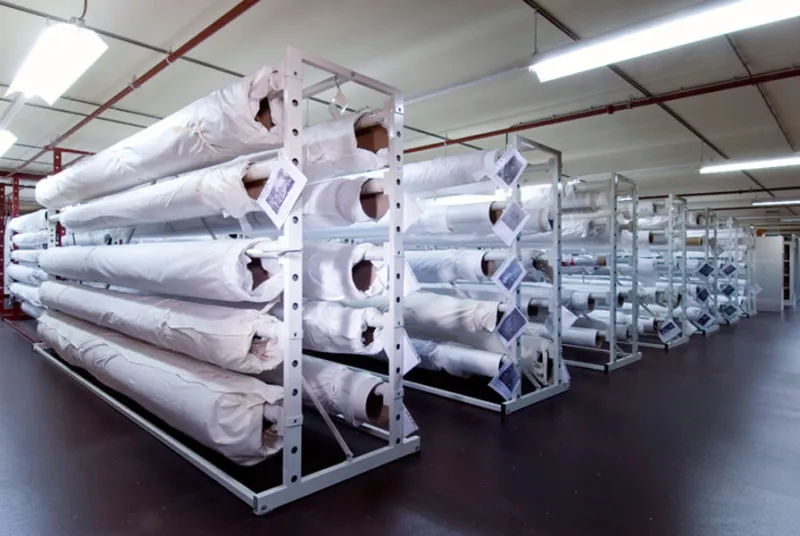
Photo: luxury rolled carpet storage climate controlled facility fine textile collection, via milestone-racking.com
There is a moment each spring, as the last frost retreats and the Hamptons begins its annual awakening, when certain estate owners undertake a ritual that would surprise even seasoned interior designers. Storage facilities are contacted. Climate-controlled vaults are unlocked. And carpets — some worth more than most automobiles, others irreplaceable artifacts of centuries-old weaving traditions — are carefully transported back into the homes they were made to inhabit.
This is not happenstance. It is choreography.
Among a growing cohort of ultra-affluent Hamptons collectors, the concept of a permanent carpet has given way to something far more considered: a rotating collection, managed with the same deliberateness one might apply to a wardrobe of haute couture. Just as a discerning client would not wear cashmere in July or linen in January, these homeowners would not layer a dense, jewel-toned Tabriz across their great room during the height of a sun-drenched Hamptons summer — nor would they leave a pale, sea-grass-toned flatweave underfoot through the moody amber weeks of late autumn.
Climate as Curator
The Hamptons presents a uniquely demanding environment for fine textiles. Salt air, humidity fluctuations, and the intensity of direct coastal sunlight conspire to accelerate the aging of materials that, under ideal conditions, might endure for generations. For collectors who have invested substantially in hand-knotted antique pieces or bespoke contemporary commissions, this is not an abstract concern — it is a governing reality.
The logic of rotation addresses this directly. Lighter, more resilient flatweaves and natural fiber constructions — those woven from seagrass, jute, or finely spun linen blends — are better suited to the high-traffic, high-humidity months of summer, when doors remain open, bare feet are common, and the boundary between indoors and outdoors grows productively blurred. Conversely, the denser, more sumptuous pile carpets — the hand-knotted Persians, the thick-cut velvets, the intricately patterned Tibetan wool pieces — emerge in autumn and winter, when the estate's interior turns inward and the desire for warmth, both literal and aesthetic, intensifies.
This seasonal logic mirrors the way a thoughtful homeowner approaches upholstery, drapery, and even tableware. The carpet, in this worldview, is simply another layer of a home's seasonal identity.
The Role of the Designer in Managing a Living Collection
For interior designers who work with Hamptons clients at this level, managing a carpet rotation is an increasingly common — and genuinely complex — responsibility. It requires not only an intimate knowledge of each piece in a client's collection but also a nuanced understanding of how those pieces interact with a home's evolving light, furniture arrangements, and social programming.
Designers who specialize in this work describe it as something closer to curatorial practice than decorating. They maintain detailed inventories: the provenance of each carpet, its fiber composition, its pile height, its colorway, and the specific rooms and seasons for which it was originally acquired or commissioned. Some maintain digital archives with scaled floor plans, allowing them to visualize rotations before a single piece is moved.
The transition itself is handled with considerable care. Professional carpet handlers — specialists distinct from conventional movers — are employed to roll, wrap, and transport pieces with the appropriate archival materials. Acid-free tissue, custom-fitted cotton muslin, and temperature-stable rolling tubes are standard. Nothing is folded. Nothing is rushed.
Storage as an Extension of the Collection
The infrastructure supporting this practice is, in itself, a study in luxury. Climate-controlled storage facilities catering to the Hamptons market have evolved significantly in recent years, moving well beyond the utilitarian warehouses of decades past. Today's premier facilities offer individual vault rooms maintained at precise temperature and humidity levels, pest-monitoring systems calibrated for textile preservation, and white-glove retrieval services that can deliver a carpet to a client's home within hours of a request.
Some collectors have invested in on-site storage solutions within their own estates — purpose-built rooms with dehumidification systems and UV-filtered lighting, designed to house their off-season pieces in conditions that rival those of museum textile departments. This level of investment speaks to how seriously these collectors regard their carpets: not as décor, but as assets deserving the same stewardship as fine art.
Entertaining Seasons and the Aesthetic Calendar
Beyond climate, the Hamptons' social calendar exerts its own influence on rotation decisions. The summer season brings a particular cadence of entertaining — outdoor gatherings that spill inside, casual luncheons, large-scale weekend parties — that calls for carpets capable of absorbing foot traffic gracefully while projecting an atmosphere of relaxed elegance. A pale, hand-loomed dhurrie in undyed cotton, or a subtly textured sisal in a neutral palette, serves this moment well: approachable, beautiful, and forgiving.
As the season transitions into the quieter, more intimate gatherings of autumn and the holiday period, the aesthetic ambitions of these interiors shift considerably. This is when the great statement carpets emerge — the antique Sultanabads with their faded terracotta and indigo, the custom Moroccan pieces in deep charcoal and gold, the bespoke modern designs commissioned from European ateliers. These are carpets intended to anchor a room, to command attention, to signal that the home has settled into a more serious and deliberate mode of living.
Designers note that clients often plan their carpet rotations in conjunction with other seasonal updates — the arrival of heavier drapery, the reintroduction of darker upholstery fabrics, the shift from outdoor to indoor floral arrangements. The carpet, in this context, functions as the foundation upon which all other seasonal changes are built.
A Practice That Reframes What a Carpet Can Be
What is most striking about the seasonal rotation practice is what it reveals about how these collectors understand their carpets. In the conventional domestic imagination, a carpet is chosen once, placed, and expected to remain. It is background. It is infrastructure.
For the Hamptons collector who maintains a curated rotation, the carpet is something else entirely: a considered choice, revisited regularly, capable of transforming a room's character as completely as any architectural intervention. It is, in the truest sense, a living element of the home — responsive to time, to season, to occasion, and to the evolving sensibility of its owner.
In this light, the seasonal swap is not an indulgence. It is a philosophy — one that treats the floor not as a fixed surface but as a canvas, renewed with each turn of the year.