Before the First Swatch: How Hamptons Designers Diagnose a Room's Soul Before Choosing a Carpet
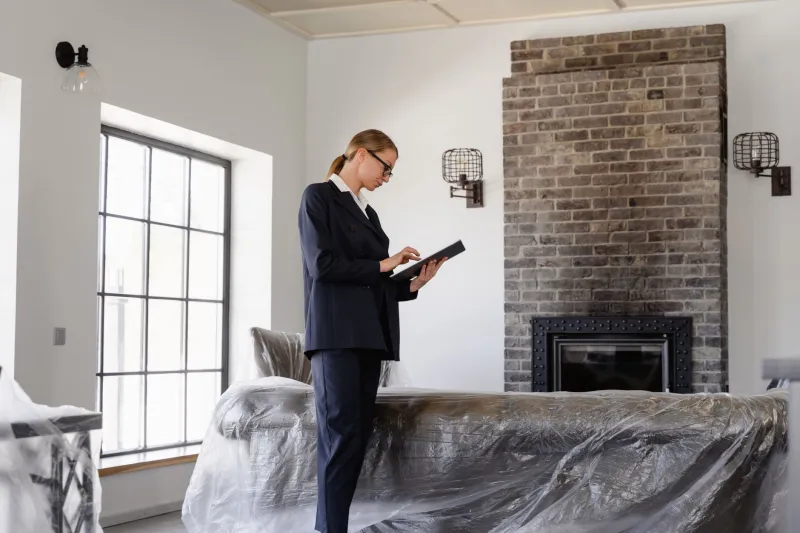
There is a moment that every seasoned Hamptons interior designer knows well. They have entered the space, set down their bag, and done nothing else. No measuring tape. No swatches fanned across a windowsill. No photographs taken. They simply stand in the room and allow it to speak.
This is not theater. It is methodology.
The selection of a luxury carpet — particularly in an estate where a single hallway runner might represent a five-figure investment — demands far more than stylistic intuition. It requires what the most accomplished designers in the region describe as a full diagnostic read: an immersive, multi-sensory assessment of how light moves through a space, how human bodies will occupy it, what emotional register the architecture already occupies, and what the room has yet to say about itself.
Understanding this process illuminates why the finest flooring decisions in the Hamptons feel, to the people who live with them, less like purchases and more like revelations.
The Light Audit: Time as a Design Variable
Light is the first language a room speaks, and veteran designers treat it accordingly. Before any fiber discussion begins, the most rigorous practitioners in the Hamptons will visit a space at multiple points during the day — sometimes across multiple days — to observe how natural illumination shifts.
A south-facing living room in a Sagaponack estate receives a quality of afternoon light that is categorically different from the diffuse morning glow filtering through a north-facing study in Water Mill. These distinctions are not incidental. They determine whether a champagne-toned wool pile will read as warm and luminous or flat and institutional. They govern whether a deeply saturated Tibetan carpet will appear jewel-like or visually heavy.
Seasoned designers know, for instance, that rooms with significant eastern exposure tend to amplify the warmth of natural fibers in the morning hours, making them feel almost golden — a quality that can be either celebrated or tempered depending on the intended atmosphere. Rooms that rely primarily on artificial lighting present a different challenge altogether, requiring designers to assess the color temperature of installed fixtures before committing to any pile or pattern.
The light audit is never rushed. It is, in many ways, the most important appointment a designer keeps.
Spatial Psychology: How Volume and Proportion Shape Fiber Choice
Beyond illumination lies the equally complex matter of spatial psychology — the way a room's dimensions, ceiling height, and architectural proportions exert pressure on the human nervous system.
High-ceilinged great rooms, common in the shingle-style estates that define much of the Hamptons' architectural vernacular, create a particular kind of vertical tension. They are grand, but they can also feel unmoored — as though the floor is insufficient anchor for the volume above. In these spaces, designers often reach for carpets with substantial pile weight and grounding tonal depth: a hand-knotted Afghan piece in earthy cinnabar, perhaps, or a dense cut-pile wool in a color that draws the eye downward and holds it there.
Conversely, rooms with lower ceilings or more intimate proportions require a different approach entirely. Here, a carpet with an open, low-contrast pattern or a pale, reflective ground can expand the perceived volume of the space without sacrificing warmth. The wrong choice — a busy, dark-ground Persian in a snug reading room, for example — can compress the atmosphere to the point of claustrophobia.
This is spatial psychology applied through textile: the understanding that a carpet does not merely cover a floor but actively participates in shaping how the body experiences the room around it.
Reading Architectural Narrative: What the Bones Already Say
Every home carries within its structure an implicit aesthetic argument. The carved plaster moldings of a traditional East Hampton manor speak a different vocabulary than the board-formed concrete walls of a contemporary Montauk retreat. Before a single fiber is selected, the most perceptive designers in the region spend considerable time listening to what that argument already is.
This is not about matching — the reflexive instinct to pair rustic beams with jute and polished marble with silk. It is about something more nuanced: understanding the emotional register of the architecture and deciding whether the carpet should reinforce it, gently complicate it, or offer a deliberate counterpoint.
A minimalist oceanfront home in Bridgehampton, stripped to its structural essentials, might seem to call for an equally spare carpet solution. But a designer with a sufficiently developed reading of the space might recognize that the architecture's restraint creates a latent hunger for tactile richness — and that a single, deeply textural hand-loomed piece could satisfy that hunger without disrupting the visual discipline the owners have so carefully cultivated.
This kind of diagnostic sensitivity is what separates a carpet selection that feels inevitable from one that merely feels appropriate.
The Invisible Narrative: Lifestyle, Ritual, and Emotional Intent
Perhaps the most rarely discussed element of the pre-selection process is the one that requires the most intimate knowledge of the client: the invisible narrative of how a room will actually be lived in.
A formal dining room used primarily for weekend dinner parties in the summer months carries entirely different requirements than a library that serves as a year-round retreat for a solitary reader. A master bedroom suite designed for rest and restoration calls for different fiber psychology than an open-plan family room that accommodates children, pets, and the full spectrum of coastal Hamptons life.
Designers who excel at this phase of the process are, in a meaningful sense, behavioral analysts. They ask not only what the client desires aesthetically but what they need emotionally. Do they seek a carpet that communicates arrival — a sense of having reached somewhere significant? Do they want the floor to recede, allowing art and furniture to command the room? Or do they want the carpet to be the room's primary statement, the piece around which all else is organized?
Answering these questions requires a quality of listening that goes well beyond the design brief.
The Sensory Walk: Instinct as Instrument
Once the analytical work is complete, the most accomplished designers in the Hamptons describe a final, less quantifiable step: the sensory walk. This is the moment when they move through the space slowly, often in silence, allowing their accumulated observations to consolidate into something resembling instinct.
It is during this walk that the room's energy — a term used without apology by professionals who have spent decades developing their perceptual acuity — becomes most legible. The space will suggest, to those trained to receive the suggestion, not merely what it needs but what it wants.
Only then does the swatch book open.
This is the discipline that defines the finest flooring decisions made in the Hamptons each season: not the breadth of one's product knowledge, nor the sophistication of one's aesthetic vocabulary, but the willingness to spend real time in a room before presuming to understand it. The carpet chosen from that place of understanding will not merely cover the floor. It will complete it.