Quiet Luxury Underfoot: Why the Hamptons' Most Opulent Homes Are Choosing Carpets That Whisper Rather Than Shout
There is a particular kind of confidence required to walk into a room and choose nothing that announces itself. In the Hamptons, where interior design has long served as a fluent language of affluence, a growing number of homeowners are electing to speak in a lower register — one that rewards the attentive eye rather than the casual glance. The result is a quietly radical shift in how luxury carpets are being selected, installed, and lived with across some of the region's most storied properties.
This is not minimalism in the austere, self-denying sense. It is something more nuanced: a philosophy of deliberate restraint, where the most expensive choice in a room is also, paradoxically, the one least likely to draw immediate attention.
The Paradox of the Invisible Statement
For decades, the defining carpet purchase in a grand Hamptons home was one that commanded the room — a richly patterned Sultanabad, perhaps, or a bold geometric with the visual authority to anchor an entire living wing. Status was communicated through conspicuousness. The rarer the dye, the more complex the weave, the more evident the investment.
What designers are observing now is something almost its opposite. "The clients who are most secure in their taste are the ones asking me for the carpet that disappears," says one East Hampton-based interior designer who has worked with the region's most private estates for nearly two decades. "They want something that makes everything else in the room look better. That is a far more sophisticated brief than 'give me something beautiful.'"
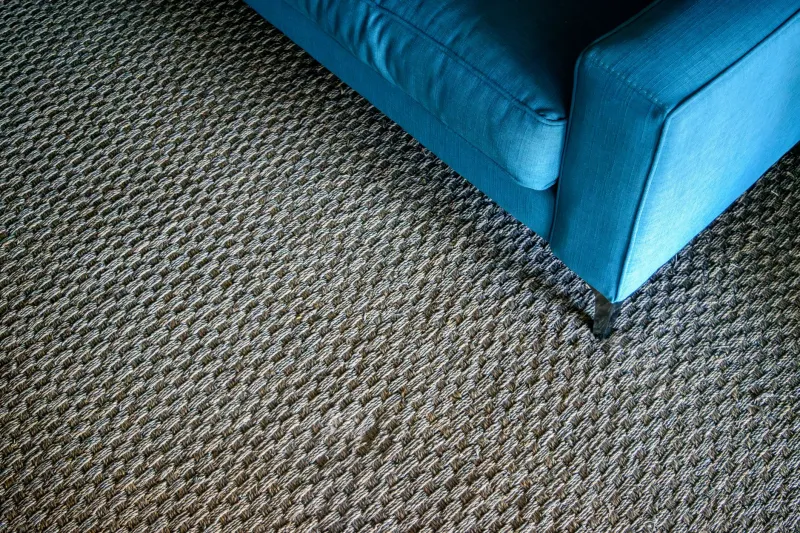
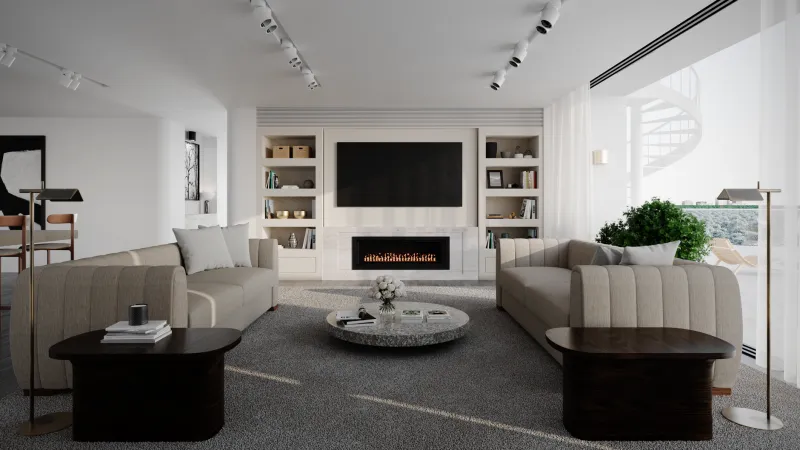
The carpets being chosen under this philosophy are typically rendered in warm naturals — aged linens, pale wheats, hushed stone tones, and the kind of greyed whites that shift character as Atlantic light moves across them through the day. Texturally, they tend toward the dense and tactile: a fine loop pile that registers as depth rather than pattern, or a hand-knotted wool whose craftsmanship reveals itself only upon close inspection.
Why Restraint Reads as Refinement
The psychology at work here is well understood among those who study luxury consumer behavior. When the very wealthy no longer need to signal wealth to one another through obvious display, the signals become subtler — and therefore more exclusive. A carpet that costs as much as a European sedan but reads, at first glance, as simply a beautiful neutral field is, in a sense, the most rarefied luxury of all. Only those who know will know.
"There is a generational shift happening," observes a Southampton-based designer whose client roster spans multiple generations of Hamptons families. "The older model was about acquisition — the more remarkable the object, the better. What we are seeing now, particularly among clients in their forties and fifties, is a preference for curation. They want fewer things, chosen with more intention. A quiet carpet is the ultimate expression of that."
This instinct also reflects a broader cultural recalibration around consumption. In an era when conspicuous display can read as insecurity rather than achievement, the understated choice carries its own prestige. The Hamptons, always a bellwether for how American affluence expresses itself, is proving to be fertile ground for this shift.
The Practical Intelligence of a Neutral Foundation
Beyond the philosophical, there are compelling practical arguments for the restrained palette. A well-chosen neutral carpet functions as an extraordinarily versatile foundation — one that accommodates the seasonal rotations of art, furniture, and decorative objects that characterize a truly alive Hamptons interior.
"When you commit to a bold carpet, you are in many ways committing the room," notes one designer who works frequently with clients maintaining both primary and secondary Hamptons residences. "A neutral foundation gives you freedom. You can bring in a vibrant painting, change out the upholstery for summer, add a layer of pattern through textiles — the floor holds all of it without competing."
This flexibility is particularly valuable in the Hamptons context, where homes must often serve radically different functions across seasons. A room that hosts intimate winter dinners for eight must transition gracefully to open-house summer entertaining for fifty. A carpet that anchors rather than dictates makes that transition not merely possible but effortless.
There is also the question of longevity. The most neutral, most refined carpet choices tend to age with remarkable grace. Where a bold statement piece may feel of its moment in five years, a beautifully crafted neutral in a durable natural fiber — a fine New Zealand wool, a dense hand-spun silk blend — accumulates character rather than dates itself. For clients who think in terms of decades rather than design cycles, this is a significant consideration.
Craftsmanship as the True Statement
Perhaps the most important insight from designers championing this approach is the role that craftsmanship plays when pattern and color step aside. When a carpet offers no bold visual hook, the quality of its construction becomes the entire story.
"You cannot hide behind a dramatic pattern when you choose a neutral," says one designer who sources carpets directly from artisan workshops in Nepal and India for her Hamptons clients. "Every knot is visible. The hand of the pile, the evenness of the dye, the integrity of the backing — all of it is exposed. That is why the clients who choose this direction are also the clients who are most educated about what they are buying. They understand that the simplest-looking carpet is often the hardest to make well."
This places the emphasis squarely on provenance and process — precisely where it belongs in a genuine luxury transaction. The conversation shifts from "what does it look like" to "who made it, and how, and from what." The carpet becomes an object of knowledge rather than merely an object of beauty.
A New Vocabulary for Hamptons Luxury
What is emerging across the region's finest interiors is, in essence, a new vocabulary — one in which restraint is the most eloquent word available. The homeowners and designers leading this movement are not abandoning luxury. They are redefining it, insisting that the most extraordinary thing a carpet can do is make a room feel entirely, effortlessly complete.
In that sense, the quiet carpet is perhaps the most ambitious choice of all. It asks everything of the quality of its materials, the skill of its makers, and the confidence of the eye that selected it. It offers nothing in the way of easy drama, and everything in the way of lasting grace.
For those who understand the difference, there is simply no comparison.