Beneath the Weave: How Hamptons Estates Are Turning Luxury Carpets Into Intelligent Living Systems
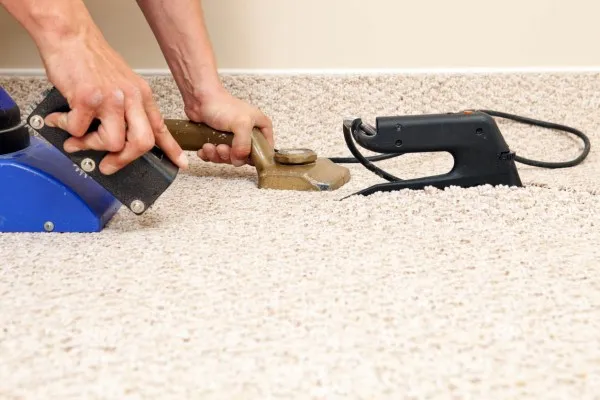
Photo: luxury carpet installation smart home technology subfloor Hamptons estate interior, via www.bobvila.com
For generations, the finest carpets in the most distinguished Hamptons homes have been judged by the qualities one can see and feel: the depth of a hand-knotted pile, the luminosity of a natural silk field, the precision of a master weaver's geometric border. These remain the essential criteria of connoisseurship, and they always will. Yet a quietly transformative movement is underway in the most forward-thinking estates along the East End — one in which the floor itself has become a functional participant in the life of the home.
Embedded beneath hand-woven runners and custom-loomed area rugs, a new class of smart flooring technology is emerging. Climate management systems, moisture detection sensors, and programmable ambient lighting arrays are now being integrated directly into subfloor assemblies, working in concert with the world's finest carpets to produce interiors that are as intelligent as they are beautiful. This is not a concession to gadgetry. It is, rather, the logical evolution of an already exacting discipline.
The Architecture of the Intelligent Floor
To understand why this movement is gaining traction among Hamptons' most design-conscious homeowners, it helps to consider the floor not as a single surface but as a layered system. Beneath even the most exquisite carpet lies a sequence of structural and functional components: the subfloor, the underlayment, and the padding. Historically, these layers served acoustic and thermal purposes. Today, they are being engineered to carry an entirely new set of capabilities.
Radiant heating systems have long been installed beneath hard flooring surfaces, but their application beneath high-end carpet has required careful recalibration. Contemporary low-profile hydronic and electric heating mats, now engineered to operate at gentler temperatures, are being specified by Hamptons designers who understand that excessive heat can compromise natural fiber integrity over time. The result is a system calibrated to maintain an even, comfortable warmth without stressing the wool or silk above it — a balance that requires close collaboration between flooring specialists, HVAC engineers, and interior designers from the earliest stages of a project.
Moisture Intelligence in a Coastal Context
Perhaps no technological integration is more directly relevant to the Hamptons environment than moisture monitoring. The proximity to the Atlantic Ocean creates a humidity profile that fluctuates dramatically across seasons, presenting particular challenges for natural-fiber carpets that are sensitive to prolonged moisture exposure. Mold, fiber degradation, and the slow warping of backing materials are concerns that, left unaddressed, can compromise even the most significant flooring investment.
A growing number of estates are now incorporating sensor networks into their subfloor assemblies — thin, low-profile arrays capable of detecting moisture levels and transmitting data in real time to a home's central automation platform. When humidity thresholds are exceeded, the system can trigger dehumidification responses automatically, alerting household managers or property caretakers before any visible damage occurs. For properties that remain unoccupied for extended periods during the off-season, this kind of proactive monitoring is not a luxury — it is a form of asset protection for carpets that may represent investments of considerable magnitude.
Ambient Light and the Art of Atmospheric Control
The relationship between light and carpet is one of the most nuanced considerations in high-end interior design. The way a hand-knotted field shifts in tone from morning to evening, the manner in which a directional pile catches raking afternoon light from a south-facing window — these are qualities that experienced designers spend considerable effort orchestrating. Integrated lighting systems now allow that orchestration to extend into the evening hours with equal intentionality.
Low-profile LED arrays, installed at the perimeter of rooms or beneath furniture bases, can be programmed to wash carpet surfaces with light at precisely controlled angles and intensities. The effect, when properly executed, is one of remarkable subtlety: the pile appears to glow from within, texture is emphasized without harshness, and the room acquires a warmth that overhead fixtures simply cannot replicate. Some Hamptons designers are using these systems to create dynamic lighting sequences that shift throughout the evening, moving from the brighter, more active illumination suited to entertaining toward the softer, more intimate quality appropriate for the close of an evening.
Preserving Aesthetic Integrity
The most common reservation among clients who are first introduced to these integrated systems is entirely understandable: will the technology compromise the look, the feel, or the long-term condition of the carpet itself? It is a legitimate concern, and one that responsible flooring professionals take seriously.
The answer, in the hands of skilled practitioners, is an emphatic no — provided that the integration is executed with the same level of care applied to the carpet selection itself. The most important safeguard is the involvement of experienced flooring specialists at the planning stage, before construction or renovation begins. Sensor profiles must be designed to accommodate the specific fiber content and backing construction of the chosen carpet. Heating systems must be calibrated to the thermal tolerances of natural materials. Installation must be carried out with precision, ensuring that no component of the subfloor system creates uneven support that could cause premature wear in the pile above.
When these conditions are met, the carpet remains visually and tactilely indistinguishable from one installed over a conventional subfloor. The intelligence is entirely invisible.
A New Conversation Between Craft and Technology
What is perhaps most compelling about this development is not the technology itself but the conversation it is opening between two disciplines that have rarely spoken directly to one another. Master weavers and their centuries-old traditions are now being considered alongside systems engineers and home automation architects. The result, at its best, is an interior that honors both.
Homeowners who have embraced this integration often describe a shift in how they relate to their floors. A carpet that was once appreciated as a static object — however magnificent — becomes something more dynamic: a surface that responds, protects, and performs. The aesthetic investment retains all of its original authority, while the floor beneath quietly fulfills a new set of responsibilities.
For those considering a significant carpet acquisition in the coming season, it is worth raising the question of intelligent integration with your flooring specialist early in the process. The most sophisticated installations are not afterthoughts; they are designed from the foundation up, with every layer of the floor working in concert toward a single, unified vision of refined living.
At Hamptons Carpet & Co., we are pleased to guide clients through the full spectrum of possibilities — from the selection of exceptional hand-crafted carpets to the thoughtful integration of the technologies that allow them to perform at the highest level for generations to come.