The Rug as Architect: How Hamptons Designers Are Building Entire Rooms From the Floor Up
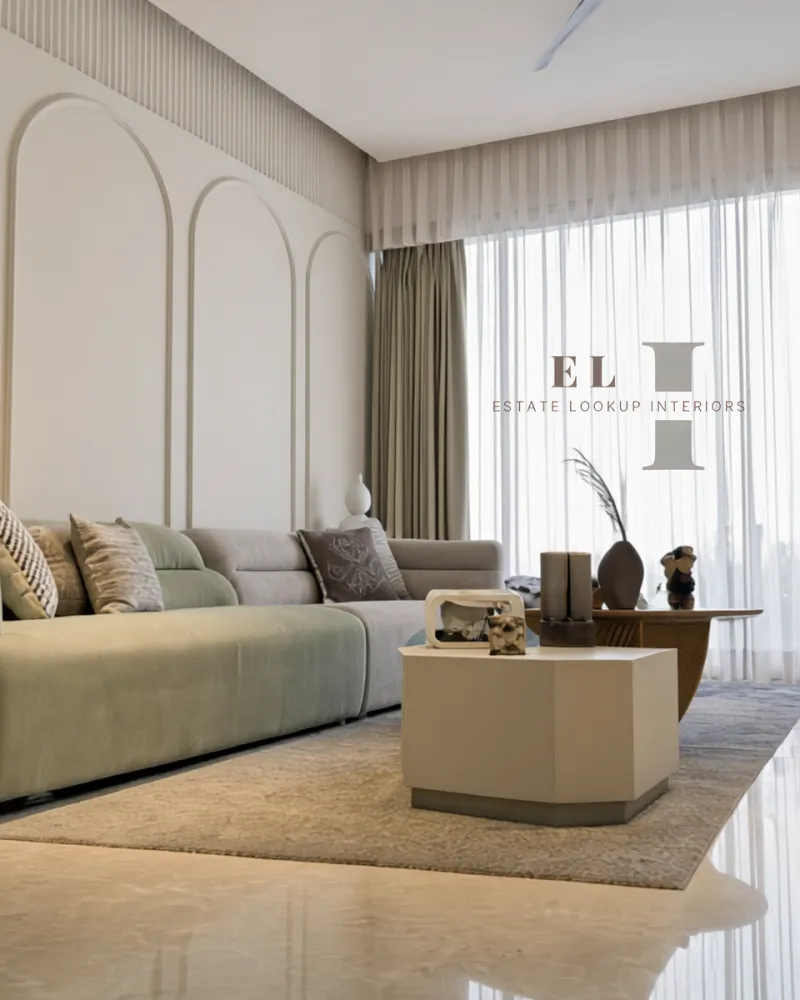
Photo: Estate Lookup Interiors, CC0, via Wikimedia Commons
For generations, the conventional wisdom of interior design followed a predictable sequence: establish the architecture, select the furniture, choose the fabrics, and then — almost as an afterthought — commission or source the carpet. The floor covering arrived at the end of the conversation, expected to harmonize with decisions already made and spaces already defined. In the most discerning circles of Hamptons design, that sequence has been quietly, deliberately reversed.
Today, a growing cohort of elite interior architects working along the East End is doing something that would have seemed counterintuitive to their predecessors: they are beginning every project with the carpet. Not as a mood board reference or a color swatch pinned to a vision board, but as the literal and figurative foundation upon which all subsequent decisions are constructed.
A Different Kind of Starting Point
The shift is not arbitrary. It reflects a deeper understanding of what a truly exceptional carpet brings to a room — and what is lost when it is treated as secondary.
A hand-knotted antique Sultanabad, for instance, carries within its field colors of extraordinary complexity: dusty rose grounds that read as blush in morning light and coral by afternoon, ivory medallions threaded with faded indigo, border geometries that contain within them an entire vocabulary of pattern. To select such a piece after the room has already been furnished is to ask it to compete. To select it first is to invite it to lead.
Interior architects who have embraced this approach describe the experience as clarifying. When the carpet is the starting point, every subsequent decision — wall color, upholstery, stone selection, millwork finish — becomes a response rather than an initiative. The room develops a kind of internal logic that is immediately perceptible to anyone who enters it, even if they cannot articulate precisely why.
The Palette Follows the Pile
One of the most immediate consequences of designing around a carpet first is the effect on color selection. When a room's palette is derived from its floor covering rather than imposed upon it, the results tend toward a naturalistic coherence that is difficult to achieve through conventional means.
Consider a recent renovation of a North Sea Road estate in Southampton, where the design team acquired a rare nineteenth-century Feraghan Sarouk before a single wall had been painted. The carpet's field — a deep, oxidized red softened by decades of use — became the anchor from which every other tone in the room was extracted. Plaster walls were tinted to the precise shade of the rug's ivory border. Custom upholstery on a pair of wing chairs was matched to the muted sage of the carpet's floral sprays. Even the veining selected in the marble fireplace surround was chosen to echo the charcoal tones threading through the border.
The result was a room that felt not merely coordinated but inevitable — as though every element had always existed in relation to every other, which, in a meaningful sense, it had.
Furniture as a Formal Response
Beyond color, the carpet-first methodology exerts a powerful influence over furniture selection and arrangement. The scale, pattern density, and visual weight of a carpet naturally suggest the scale and character of the pieces that will share its plane.
A boldly geometric Moroccan carpet, with its high-contrast diamond lattice and assertive borders, calls for furniture of architectural simplicity — clean lines, substantial forms, minimal ornamentation. To introduce fussy, heavily carved pieces into such a field would create visual noise rather than dialogue. Conversely, a silk Isfahan of extraordinary delicacy — its arabesque ground rendered in tones of ivory, blush, and gold — invites furnishings of corresponding refinement: slender-legged case pieces, silk damask upholstery, lacquered surfaces that reflect rather than compete.
Hamptons designers who work in this manner speak of the carpet as setting a kind of formal register for the room, establishing whether the interior will be spare or layered, monumental or intimate, restrained or exuberant. Every subsequent selection either honors that register or violates it.
Architectural Decisions Reconsidered
Perhaps the most striking dimension of the carpet-first approach is its capacity to influence decisions that might otherwise seem fixed: architectural choices about trim profiles, ceiling treatments, and the character of built-in millwork.
In one notable project — a newly constructed shingle-style residence in Water Mill — the design team acquired an extraordinary seventeenth-century Polonaise carpet before the interior architecture had been fully resolved. The carpet's silk pile, woven in champagne, sage, and pale gold, possessed a luminosity that the team recognized as the defining quality of the room. In response, they specified a coffered ceiling with gold-leaf details in the coffers, a decision that might have read as excessive in isolation but that, in the presence of the carpet, felt entirely earned. The millwork was finished in a pale, warm lacquer that echoed the rug's ground color. Window casings were kept deliberately slender to maximize the wall surfaces that would frame — and respond to — the carpet's field.
The room, when complete, was understood by every visitor as something exceptional, though few could identify the source of its authority. The carpet, of course, was that source.
The Discipline the Approach Demands
It would be a mistake to suggest that designing around the carpet first is a straightforward or effortless process. It demands a particular kind of discipline — and a willingness to subordinate individual preferences to the internal logic of the piece.
Designers who practice this method are candid about the challenges. A carpet of genuine rarity and complexity will occasionally suggest a direction that conflicts with a client's stated preferences. The resolution of that tension requires both conviction and communication. The designer must be able to articulate why the carpet's authority should be honored, and the client must be willing to trust that the resulting interior will transcend what they might have imagined for themselves.
It also requires that the carpet be acquired early — sometimes before the broader design direction has been established. This demands confidence in one's eye and a willingness to commit to a piece before the full context of its use is known. For designers with deep expertise in historic and contemporary floor coverings, this is not a burden but a pleasure. For those less fluent in the language of fine carpets, it can be a point of genuine uncertainty.
Why the Hamptons Context Matters
The Hamptons provides a particularly fertile environment for this approach. The region's interiors are, by their nature, ambitious — homes of significant scale, designed for a clientele that expects both comfort and distinction. The light along the East End, famously clear and luminous, rewards surfaces of genuine quality and punishes those that are merely adequate. A fine carpet, in such conditions, reveals its full character in ways that more forgiving light would obscure.
There is also the matter of provenance. Hamptons clients who invest in exceptional floor coverings tend to understand them as acquisitions of lasting significance — pieces that will outlast trends, appreciate in cultural value, and define the character of a home across generations. To design a room around such a piece is not merely a stylistic choice; it is an acknowledgment of the carpet's primacy as an object of genuine importance.
The designers who have embraced this methodology are, in a sense, simply recognizing what the finest carpets have always known about themselves: that they are not accessories to a room, but its essential argument.