Pile, Provenance, and Portfolio: Why Hamptons Estates Are Acquiring Heirloom Carpets as Generational Assets
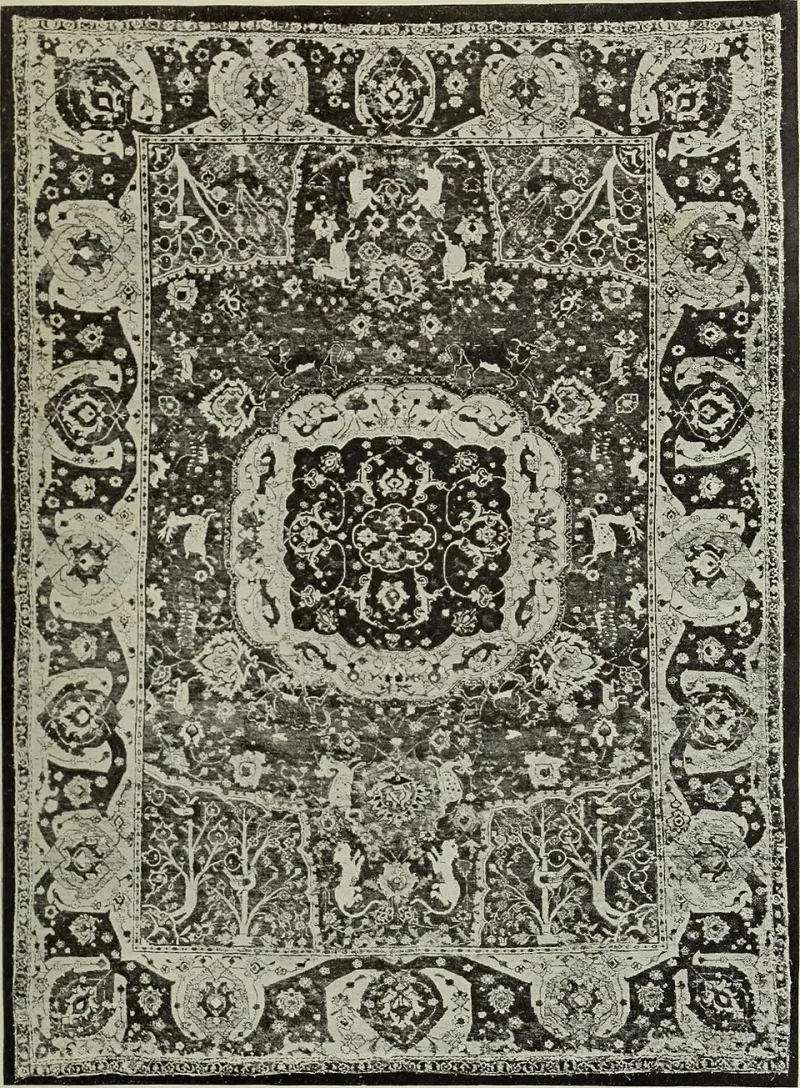
Photo: Internet Archive Book Images, No restrictions, via Wikimedia Commons
For decades, the conversation around carpet in a luxury home began and ended with aesthetics: Does it complement the drapery? Does it anchor the seating arrangement? Does it hold up against salt air and summer foot traffic? Those questions remain relevant, of course—but among a particular tier of Hamptons collector, they have been joined by a far more consequential inquiry: What is this piece worth in twenty years?
The answer, in many cases, is considerably more than was paid for it.
From Decoration to Documentation
The shift in how ultra-affluent homeowners conceptualize their floor coverings mirrors a broader evolution in the luxury market. Just as wristwatches, handbags, and vintage wines have been formally recognized as alternative asset classes, the finest handwoven and bespoke carpets are earning a place in serious collections—catalogued, insured, and in some instances, stored rather than displayed when not in active use.
What distinguishes an heirloom carpet from a merely expensive one is provenance. A nineteenth-century Tabriz rug with documented ownership history, or a contemporary commission executed by a master weaver working in a centuries-old tradition, carries with it a story that appreciates alongside the fibers. Provenance is, in the language of the art world, the paper trail that transforms an object into a cultural artifact. Hamptons collectors who have spent years acquiring paintings and sculpture are applying the same due diligence to the rugs beneath them.
Specialist auction houses—Sotheby's, Christie's, and Bonhams among them—have long maintained dedicated textile and carpet departments, and results in recent years have reinforced the case for serious acquisition. A seventeenth-century Safavid carpet sold at auction in New York exceeded seven figures, and museum-quality Caucasian pieces from the nineteenth century routinely command prices that rival mid-market contemporary paintings.
The Craftsmanship Premium
To understand why certain carpets hold or increase their value, it helps to understand what separates a handwoven masterwork from a high-quality machine-made alternative. A single square foot of a fine hand-knotted Persian carpet may contain upward of five hundred individual knots, each tied by hand and trimmed to a precise pile height. A room-sized piece from a master workshop in Qom or Isfahan might represent two to three years of sustained labor by a team of skilled artisans. That density of human time and expertise is, quite simply, irreplaceable.
Beyond knot count, the materials themselves tell a story. Naturally dyed wool—colored with pomegranate rind, indigo, or saffron using recipes passed down through generations—develops a patina over decades that synthetically dyed fibers cannot replicate. Silk-pile carpets, woven in limited numbers by workshops with centuries of institutional memory, become more luminous with age, their sheen deepening rather than dulling. These are not products of a supply chain; they are the output of a living craft tradition, and their scarcity is structural.
For Hamptons clients commissioning bespoke pieces, the craftsmanship premium extends to collaboration. Working with an atelier to design a carpet around an estate's specific architecture—its proportions, its light, its existing collection—produces a piece that is, by definition, unique. That singularity is itself a form of value.
Building a Carpet Portfolio
Collectors who approach carpet acquisition strategically tend to organize their holdings across several categories. Antique and semi-antique pieces—generally defined as those over fifty and over twenty-five years old, respectively—form the foundation of many portfolios, offering the most established market comparables and the greatest historical documentation. Transitional pieces, woven in traditional styles but produced in the late twentieth century by ateliers that have since closed or shifted production, occupy a middle tier with strong appreciation potential as their numbers diminish.
Contemporary fine carpets, commissioned from living master weavers or produced in limited editions by prestigious workshops, represent the speculative tier—higher risk, but with the potential for significant appreciation if the maker's reputation grows or the edition becomes culturally significant. Several Hamptons collectors have found particular success acquiring works by Iranian-American and Afghan-American weavers whose practices bridge traditional technique and contemporary fine art, placing their work in a conversation that resonates with both the carpet market and the broader art world.
Documentation is essential at every level. Certificates of authenticity, condition reports, professional appraisals, and photographic archives should accompany every acquisition. Many serious collectors work with specialist consultants—individuals with expertise in both the textile market and the luxury interior space—to ensure that purchases are made at appropriate price points and that the collection is managed with the same rigor applied to other asset classes.
Care as Capital Preservation
An heirloom carpet that has been improperly maintained is an heirloom carpet that has lost value. This is perhaps the most important practical consideration for collectors who view their holdings as financial assets. Regular professional cleaning—using methods appropriate to the fiber type and dye chemistry—prevents the accumulation of particulate matter that causes premature wear. Proper storage, when a piece is not on display, requires acid-free padding, controlled humidity, and protection from light exposure.
For estates in the Hamptons, where seasonal occupancy patterns mean that some rooms sit unused for months at a time, these considerations are particularly acute. A carpet left in an unmonitored environment over a long winter is vulnerable to moisture, pests, and the kind of gradual damage that is expensive to remediate and impossible to fully reverse. Capital preservation, in this context, is a maintenance discipline.
The Legacy Dimension
Perhaps the most compelling argument for heirloom carpet acquisition is one that transcends the financial entirely. A carpet woven two hundred years ago in a village workshop has already outlasted empires, wars, and the complete transformation of the world it was made in. The finest contemporary commissions are designed with the same expectation of longevity—to be passed from one generation to the next, accumulating meaning with each transfer of ownership.
For families with Hamptons estates that are themselves intended as generational holdings, there is a particular resonance in furnishing those spaces with objects that share the same horizon. The carpet beneath the dining table is not a consumable; it is a document. It records the taste, the judgment, and the values of the person who chose it—and it will continue to make that argument long after the choosing is forgotten.
At Hamptons Carpet & Co., we work with clients who understand this distinction. Our role is not simply to source beautiful floor coverings; it is to help build collections that will endure.