Masters of Revival: The Quiet Craftsmen Breathing New Life Into Hamptons' Most Irreplaceable Carpets
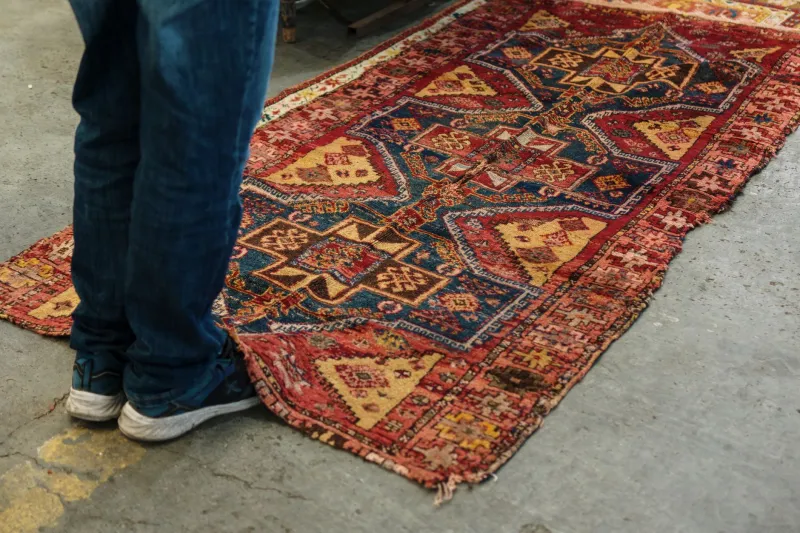
There is a particular kind of silence that descends over a restoration studio when a truly significant carpet is unrolled for the first time. It is the silence of recognition — of understanding, without a word being spoken, that what lies on the examination table is not merely a floor covering but a document of history, craft, and in many cases, extraordinary financial value. In the Hamptons, where estates routinely house textiles that have survived ocean crossings, decades of formal entertaining, and the particular atmospheric pressures of coastal living, that silence is something master restorers know intimately.
The world of high-end carpet restoration is one of the most specialized — and least visible — service categories serving the region's affluent homeowners. These are not cleaning services in any conventional sense. They are conservation practices, staffed by individuals whose training often spans traditional textile arts, chemistry, and art historical scholarship. Their clients do not call them when a carpet looks tired. They call when a carpet is irreplaceable.
The Distinction Between Cleaning and Conservation
For homeowners accustomed to routine professional cleaning, the concept of carpet conservation can require a subtle reorientation of expectations. Cleaning, however thorough, is a maintenance discipline. Conservation is a restorative one — and the difference matters enormously when the subject is a nineteenth-century Tabriz, a mid-century Edward Fields commission, or a hand-knotted Tibetan piece acquired through a private dealer with no surviving duplicate.
Master restorers working with Hamptons estates typically begin any engagement with a condition assessment that would not look out of place in a fine art museum. Fibers are examined under magnification to determine structural integrity. Dyes are tested for stability and, in older pieces, for the presence of natural mordants that require particular handling. Pile density is mapped, fringe condition is documented, and any previous repairs — whether sympathetic or damaging — are identified and catalogued.
Only after this diagnostic phase does any physical intervention begin. And even then, the philosophy governing every decision is one of restraint: the goal is always to do as little as necessary to achieve stability and aesthetic coherence, never to impose a false perfection that erases the evidence of a textile's genuine history.
The Science Behind Fiber Rehabilitation
One of the least understood aspects of luxury carpet restoration is the extent to which it draws on materials science. Wool, silk, and the rare natural fibers found in the most distinguished antique pieces each respond differently to moisture, temperature, tension, and chemical exposure. A treatment that rehabilitates a compressed wool pile may be entirely inappropriate for a silk foundation. The pH balance of any cleaning solution must be calibrated not merely to the fiber type but to the specific dye chemistry of the individual carpet.
For pieces that have suffered prolonged coastal exposure — a common condition among Hamptons estates where salt air permeates even the most carefully climate-controlled interiors — restorers must also contend with the cumulative effects of hygroscopic stress. Salt particles embedded deep within pile fibers attract and retain moisture, accelerating both fiber degradation and dye migration. Addressing this requires a carefully sequenced process of controlled hydration, gentle mechanical agitation, and extended drying under conditions that prevent any further dimensional distortion.
Color restoration presents its own distinct set of challenges. Where fading has been uniform, skilled restorers can often achieve a remarkably seamless result through the careful application of fiber-reactive dyes matched to the original palette. Where fading is uneven — as is frequently the case with carpets that have spent years partially covered by furniture — the work demands an almost painterly sensitivity, building color gradually in thin applications rather than attempting any single corrective intervention.
Reweaving: Where Craft Becomes Art
Perhaps no aspect of the restorer's practice commands more admiration — or commands a higher premium — than structural reweaving. When a carpet has suffered physical damage, whether through moth activity, mechanical tearing, or the kind of localized deterioration that accumulates over decades of use, the only path to genuine restoration is the reintroduction of new material into the existing structure.
At the highest level of the craft, this work is indistinguishable from the original weaving. Master reweavers study the knotting structure, pile direction, and color sequencing of the surrounding textile before a single knot is tied. They source fibers that match the original in both composition and hand, and they age new materials where necessary to prevent any visible discontinuity between old and new. In the most demanding cases — a significant field repair in a room-sized antique Persian, for instance — a single project may require hundreds of hours of work spread across several months.
For Hamptons homeowners who have inherited such pieces or acquired them as part of a broader estate purchase, this level of intervention represents not merely a preservation expense but a sound investment decision. A carpet that enters restoration in a compromised structural state and emerges with its integrity fully renewed retains — and in many cases appreciates — its appraised value in ways that an unaddressed piece simply cannot.
The Relationship Between Restorer and Client
What distinguishes the most accomplished restoration practices serving the Hamptons market is not only technical expertise but the quality of the ongoing relationship they cultivate with estate owners and their interior design teams. The finest restorers function less as service providers than as trusted advisors — individuals who are consulted not only in moments of crisis but as part of the regular stewardship of a significant textile collection.
This advisory relationship often begins with the creation of a condition register: a comprehensive photographic and written record of every significant carpet in an estate's collection, documenting current condition, any known history, and recommended intervals for professional assessment. For estates that rotate their finest pieces seasonally — a practice increasingly common among serious Hamptons collectors — this register becomes an invaluable reference point, ensuring that each carpet receives appropriate attention before and after periods of active use or storage.
Restorers in this advisory capacity also serve as an early warning system, identifying emerging issues — a loosening fringe, an area of incipient pile loss, the early signs of dye instability — before they develop into more costly and complex problems. In this sense, the investment in a sustained conservation relationship pays dividends that extend well beyond any single intervention.
Preservation as a Philosophy of Ownership
Ultimately, the world of luxury carpet restoration speaks to a broader philosophy of ownership that distinguishes the most thoughtful Hamptons collectors from those who regard fine furnishings as merely decorative acquisitions. To commission serious restoration work is to make a declaration: that what has been acquired is worth preserving, that the craft embedded in its making deserves ongoing respect, and that the responsibility of stewardship extends across generations rather than ending at the point of purchase.
In a market where the finest carpets routinely represent significant appraised values — and where the most distinguished antique pieces are effectively impossible to replace regardless of the resources available — that philosophy is not sentiment. It is strategy.
For estates in the Hamptons, where the interplay of natural beauty, architectural ambition, and cultural aspiration has always produced interiors of genuine distinction, the quiet craftsmen of the restoration world remain among the most essential — and most discreet — partners in the long-term preservation of something genuinely irreplaceable.