What Your Floors Say Before You Do: Decoding the Silent Language of Carpet Selection
Long before a guest registers the art on the walls or the furniture arranged with studied intention, the floor beneath their feet has already begun its quiet monologue. In the Hamptons, where interiors are curated with the same rigor applied to investment portfolios, carpet choices function as a form of autobiography—one written in fiber, color, and proportion. Understanding this unspoken grammar is the first step toward a home that communicates exactly what its owner intends.
The Psychology of Pile: What Fiber Choices Reveal
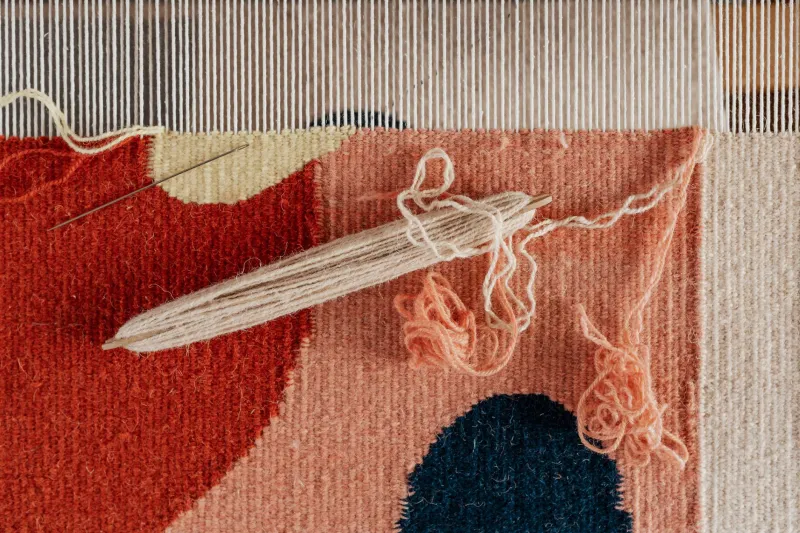
Consider the homeowner who gravitates without hesitation toward hand-knotted wool. There is something deliberate in that preference—an appreciation for provenance, for the human hours embedded in each knot, for the way the material ages honestly rather than gracefully masking its years. Wool loyalists, in the experience of the most perceptive Hamptons designers, tend to be individuals who value depth over novelty. They are drawn to things built to endure, whether in relationships, architecture, or the slow accumulation of knowledge.
By contrast, those who select silk-blend carpets—or commission pieces where silk is introduced along the high points of a pattern to catch and redirect ambient light—are communicating something altogether different. Silk speaks to an appetite for transformation, for the way a room can shift its character depending on the hour and the angle of the sun. It is the fiber of people who understand that beauty is not static, that a home ought to feel subtly different at noon than it does at dusk.
Cashmere and mohair blends, rarer still, tend to appear in the homes of those who have moved entirely beyond the need to announce their taste. These are fibers chosen for private pleasure rather than legible signaling—and that distinction itself communicates a refined self-assurance that no amount of obvious luxury can replicate.
Color Preferences as Emotional Autobiography
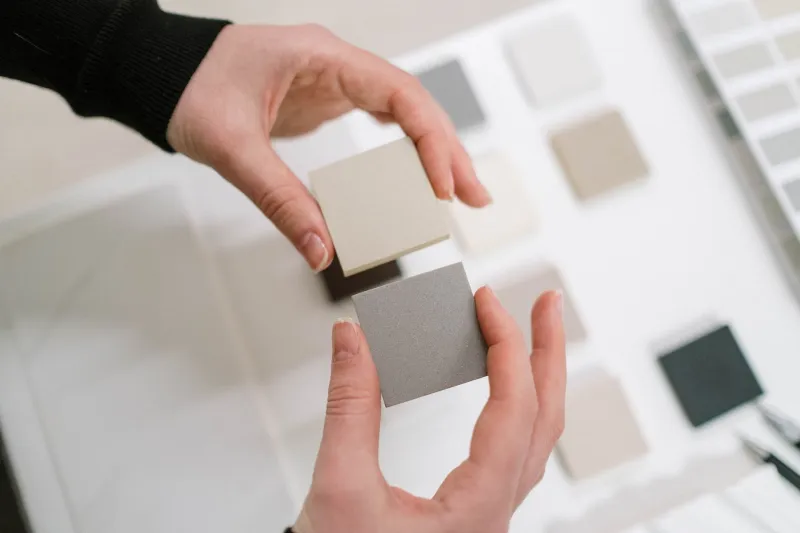
The palette a homeowner selects for their primary living spaces is rarely accidental, even when it presents itself as intuitive. Neutral grounds—the warm ivories, the layered greiges, the barely-there stone tones—are often chosen by individuals who understand that restraint is its own form of authority. In the Hamptons, where the natural landscape already delivers extraordinary color through light and water and the particular blue-grey of the Atlantic horizon, a quiet carpet allows the exterior world to participate fully in the interior conversation.
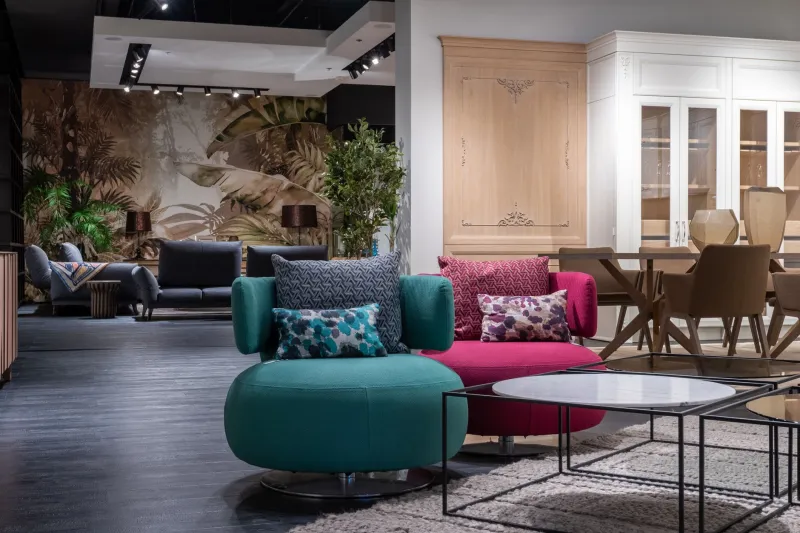
Deep, saturated colors tell a different story. A room anchored in a forest green or a cognac-inflected burgundy signals a homeowner who is not merely decorating but constructing a world with intentional boundaries—a space that makes a claim on the senses the moment one crosses the threshold. These are individuals who have likely traveled widely, absorbed the grand hotel traditions of Europe, and decided that their private residence deserves the same enveloping quality as the finest drawing rooms they have encountered abroad.
Blue, in its many gradations, occupies a particularly interesting position in Hamptons interiors. The homeowner who chooses indigo or midnight navy for a study or library is often expressing a relationship with solitude and contemplation—a desire for a room that functions as a retreat from social performance. Lighter coastal blues, meanwhile, communicate ease and a deliberate alignment with the geography of place, a reminder that the ocean is never truly far.
Spatial Decisions and the Grammar of Proportion
Beyond fiber and color, the spatial decisions a homeowner makes—how a carpet is sized relative to the room, whether it is placed wall-to-wall or floated as an island of pattern and texture—speak to deeper organizational philosophies.
Those who insist on wall-to-wall installation in primary living spaces often possess an instinct for continuity and coherence. They are not interested in visual interruption; they want a room to read as a unified whole, the floor as foundation rather than feature. There is something confident and unhurried in this choice—an understanding that the most sophisticated interiors are those in which no single element competes for dominance.
The client who prefers a large area rug floated over hardwood or stone is making an equally articulate statement, though in a different register. Here, the carpet becomes a stage—a defined zone within a larger space that organizes furniture, directs movement, and creates a center of gravity without imposing on the room's periphery. This approach tends to appeal to those with a strong curatorial sensibility, individuals who have spent time thinking about how objects and surfaces relate to one another across a room.
Perhaps most revealing are the homeowners who layer rugs—placing one textile over another in a practice borrowed from the great houses of the Ottoman tradition and later absorbed into European aristocratic interiors. Layering communicates a comfort with complexity, with histories intersecting rather than resolving into a single clean narrative. In the Hamptons, this approach is increasingly favored by collectors who have acquired pieces over decades of travel, and who understand that the resulting interior is a kind of map of their own intellectual and aesthetic journey.
Pattern as Personal History
A homeowner who commissions or selects a carpet with a geometric pattern is often expressing a preference for order, for the satisfaction of systems that hold. Geometric carpets in Hamptons interiors frequently appear in the offices and libraries of individuals who spend their professional lives managing complexity—those for whom the clean resolution of a repeated motif provides a specific, necessary pleasure.
Floral and botanical patterns, on the other hand, carry entirely different associations. In their most refined expressions—hand-knotted Persian or Indian pieces with naturalistic renderings of pomegranates, vines, and blossoms—they communicate a relationship with beauty that is rooted in the organic world, in the cycles of growth and season. Homeowners who choose these patterns are often those who garden seriously, who follow the provenance of their food, who understand that luxury and nature need not exist in opposition.
Abstract designs, whether drawn from mid-century modernism or the more recent tradition of artist-designed carpets, tend to appear in homes where the boundaries between fine art and functional object have been deliberately blurred. These clients typically have significant art collections, and they approach their floors with the same acquisitive intelligence they bring to their walls.
The Floor as Fluent Self-Expression
What the most perceptive designers working across the Hamptons have long understood is that their clients are not simply choosing carpets—they are composing statements about who they are, what they value, and how they wish to move through the world. The selection process, when approached with genuine intention, becomes a kind of self-examination: a series of choices that, taken together, reveal a coherent philosophy.
At Hamptons Carpet & Co., we have observed this process across hundreds of homes and thousands of consultations. The homeowners who arrive with the greatest clarity about what they want are invariably those who have spent time understanding what they are actually trying to say. The carpet beneath their feet, in the end, is never merely decorative. It is, in the most precise sense, a language—and the most distinguished homes in the Hamptons speak it fluently.