The Foundation Beneath the Finish: Why Premium Carpet Underlay Is the Hamptons' Best-Kept Design Secret
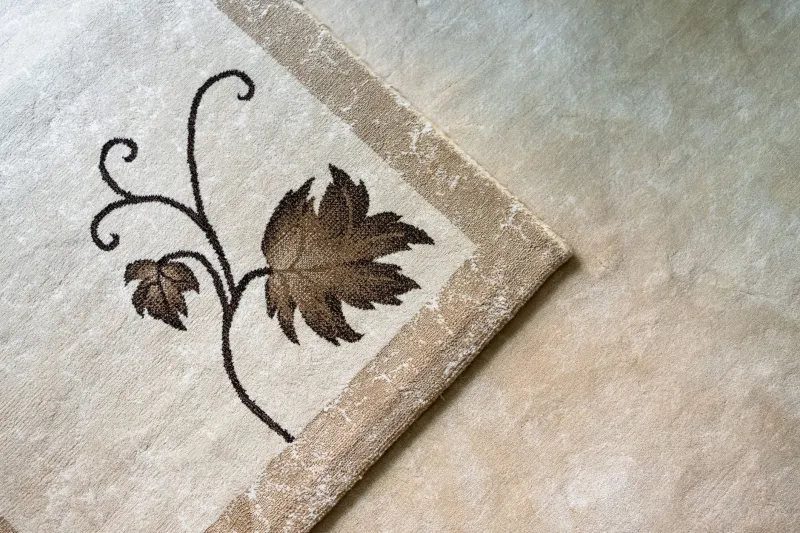
There is a particular kind of knowledge that separates the merely well-appointed home from the genuinely exceptional one. It lives not in the visible — the hand-knotted Tibetan wool, the bespoke pattern, the carefully matched palette — but in the invisible layer that no guest will ever see and every occupant will perpetually feel. In the Hamptons, where the standard for residential refinement is set against a backdrop of ocean light and architectural ambition, premium carpet underlay has quietly become one of the most consequential decisions a homeowner can make.
Yet for all its significance, the substrate beneath a fine carpet remains one of the most undervalued elements in the luxury flooring conversation. That is beginning to change.
What Underlay Actually Does — and Why It Matters More Than Most Realize
At its most fundamental level, carpet underlay — sometimes called carpet padding or cushion in the American market — serves as the intermediary between a hard subfloor and the textile surface above it. But to describe it only in those terms is to dramatically undersell its function.
High-quality underlay performs a constellation of roles simultaneously. It absorbs the compressive stress that foot traffic places on carpet fibers, extending the life of even the most durable wool or silk-blend pile by preventing the kind of accelerated fiber breakdown that occurs when carpet meets hard subfloor without adequate cushioning. It regulates thermal transfer, acting as an insulating layer that contributes meaningfully to a room's warmth in winter and its resistance to heat in summer — a consideration of particular relevance in Hamptons homes where radiant floor heating systems and coastal temperature swings are both common realities.
Perhaps most significantly for the discerning homeowner, premium underlay is a formidable acoustic tool. Dense, high-resilience foams and natural fiber substrates absorb impact sound — the kind generated by footfall, furniture movement, and the general rhythm of household life — and reduce it in ways that even the finest carpet alone cannot fully achieve. In multi-story Hamptons estates where guest suites occupy floors above principal living areas, this acoustic performance is not a luxury consideration. It is an architectural necessity.
The Coastal Variable: Why Hamptons Homes Demand a Higher Standard
Not all underlay performs equally in all environments, and the Hamptons presents a specific set of conditions that make material selection here more demanding than in most American residential markets.
The coastal climate introduces elevated humidity, salt-laden air, and the particular thermal cycling that comes with proximity to open water. Standard synthetic foam underlays, which perform adequately in controlled inland environments, are susceptible to moisture retention in coastal conditions — a problem that can accelerate mold formation beneath a carpet without any visible surface indication until significant damage has already occurred.
Several Hamptons architects and interior designers have begun specifying moisture-resistant or naturally antimicrobial underlay materials — including dense natural rubber, wool-felt composites, and closed-cell foam formulations — precisely to address this vulnerability. One East Hampton design principal, working on the renovation of a cedar-shingled waterfront property in Amagansett, noted that the selection of a premium natural rubber underlay was driven as much by the home's proximity to the dune line as by any performance specification. The substrate, she observed, needed to be as durable as the landscape it occupied.
Case Study: When the Substrate Justified the Sale Price
The connection between underlay quality and property valuation may seem abstract until one considers specific transactions. In the luxury real estate market, where buyers at the upper tier of the price spectrum are frequently advised by architects and design consultants before making acquisition decisions, the condition and quality of installed flooring systems — including their substrate layers — can materially influence perceived value.
A notable example emerged during the sale of a shingled estate in Water Mill, where the listing agent worked alongside a flooring consultant to document the full specification of the home's carpet installations. The property featured hand-woven broadloom throughout its principal rooms, installed over a high-density wool-felt underlay chosen for its thermal and acoustic properties. During buyer due diligence, the flooring documentation — which detailed not only the carpet provenance but the underlay specification and its projected lifespan — contributed to the buyer's confidence in the installation's longevity. The carpets, already fourteen years old at the time of sale, showed minimal compression or fiber fatigue, a condition the buyer's consultant attributed directly to the quality of the substrate beneath them.
The transaction closed above the initial asking price. The underlay, invisible and unacknowledged by most visitors to the property, had quietly earned its place in the valuation.
The Acoustic Dividend in Entertainment Spaces
Among the most compelling arguments for premium underlay investment is its contribution to the acoustic environment of dedicated entertainment spaces — home theaters, music rooms, and the kind of expansive open-plan living areas that have become central to Hamptons residential design.
In these contexts, the underlay works in concert with the carpet above it to create what acoustic engineers refer to as a composite absorption system. The carpet addresses high-frequency reflections while a dense, resilient underlay manages the lower-frequency impact transmission that travels through floor structures. The result is an environment in which sound behaves with a composure that sophisticated audio systems — and sophisticated ears — can fully appreciate.
Designers working on media rooms and home theaters in the Hamptons have increasingly specified dual-density underlays, which layer materials of different densities to address a broader frequency range. The additional cost over standard padding is, in most cases, modest relative to the overall installation budget. The acoustic return, however, is disproportionately significant.
Selecting the Right Substrate: A Framework for the Informed Buyer
For homeowners approaching a carpet installation or renovation, the underlay decision warrants the same deliberate consideration given to fiber selection, pile weight, and pattern. Several criteria should guide the process.
Density and resilience determine how well the underlay will resist permanent compression under furniture and high-traffic areas. A substrate that collapses under load transfers that stress directly to the carpet fibers above, accelerating wear in precisely the areas where it is most visible.
Moisture resistance is non-negotiable in coastal environments. Natural rubber and closed-cell foam formulations offer the most reliable protection against the humidity conditions specific to the East End.
Thermal performance should be evaluated in the context of the home's heating system. In properties with radiant floor heating, the underlay must allow adequate thermal transfer while still providing cushioning — a balance that requires careful material specification.
Acoustic rating matters most in multi-story homes and rooms where sound management is a design priority. Independent impact isolation class (IIC) ratings provide a standardized basis for comparison.
The Invisible Investment
There is a certain philosophy embedded in the choice to invest in what cannot be seen. It reflects a commitment to quality that is not contingent on recognition — a standard of care applied to the foundations of a home because the foundations deserve it, regardless of whether they are ever acknowledged.
In the Hamptons, where the finest interiors are distinguished as much by what they feel like as by what they look like, premium carpet underlay represents precisely this kind of invisible investment. It extends the life of irreplaceable textiles, elevates the acoustic and thermal character of every room it occupies, and contributes — quietly, reliably — to the long-term value of the estate above it.
The most discerning homeowners have always understood that excellence begins at the foundation. The underlay beneath a great carpet is simply one more expression of that truth.